
Black and White Nail Designs: The Complete Guide to Styles, Techniques, and Longevity
Black and white nail designs remain one of the most consistently requested combinations in the nail industry, and it’s easy to understand why. This pairing offers striking, high contrast visual impact while remaining genuinely versatile enough to suit nearly any outfit, occasion, or personal style. Unlike trend driven color combinations that feel dated within a season, black and white manages to look fresh regardless of what else is currently popular.
This guide goes beyond a simple photo gallery. It explains which specific techniques and application methods actually produce clean, professional looking results at home versus which ones genuinely require salon precision, how nail shape and length should influence design choice, and details most articles skip entirely like why black and white polish combinations chip and show wear differently than other color pairings, and what that means for your maintenance routine. Whether you’re planning your first black and white manicure or refining a look you already love, this is the deeper, more practical guide.
Why Black and White Nail Designs Remain So Popular
Black and white nail designs have maintained lasting popularity largely because the combination offers genuine versatility that few other color pairings can match. This high contrast duo pairs effortlessly with virtually any outfit color, skin tone, or occasion, from casual daytime looks to formal evening events, without requiring careful coordination the way many colored nail designs typically demand.
This color combination also photographs exceptionally well, a genuinely relevant consideration given how much nail art inspiration and documentation happens through photos and social media today. The strong contrast between black and white creates crisp, well-defined lines and shapes that read clearly even in smaller images, unlike more subtle color combinations that can sometimes blur together visually.
There’s also a practical durability consideration worth noting: black and white nail designs tend to show growth and minor wear somewhat less obviously than very light, pale colors alone, since the black elements provide visual structure that doesn’t reveal a thin line of regrowth as immediately as an entirely pale, monochromatic manicure would.
Finally, this timeless quality means black and white nail designs rarely feel dated, unlike more seasonally or trend specific color combinations. This makes the pairing a genuinely reliable choice for those wanting their manicure to remain stylish regardless of shifting broader color trends throughout the year.
Latest Post: https://nailsblooming.com/pink-chrome-nail-ideas/
Classic French Tips With a Black and White Twist
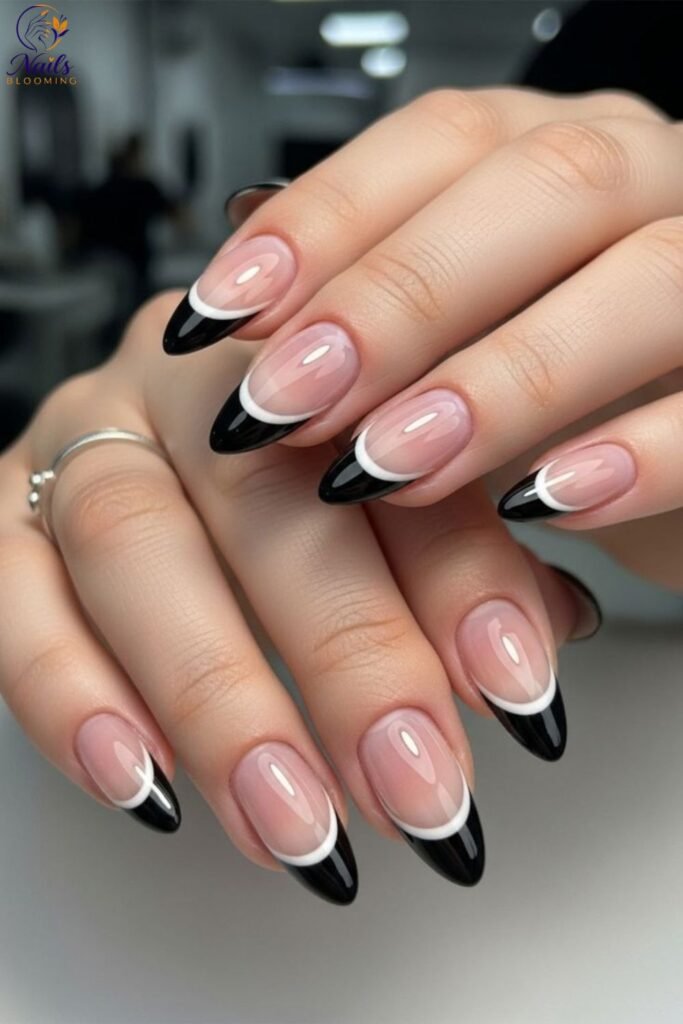
The classic French manicure gets a striking update within black and white nail designs by reversing or reimagining the traditional pale pink base and white tip combination. A crisp white base paired with black tips, or the reverse, creates a bold, graphic take on this timeless style that feels considerably more current than the traditional soft, neutral version.
Precision matters significantly for this particular design, since the clean line separating the two colors needs genuinely careful application to look polished rather than sloppy. Using thin nail art tape or a dedicated French tip guide helps achieve crisp, even lines, particularly important given how visible any unevenness becomes with such high contrast colors.
A helpful example: someone attempting this design freehand without any guide tool often finds achieving a perfectly straight, even line considerably more difficult than expected, since even slight wobbles become immediately obvious against the stark black and white contrast. Using tape specifically designed for nail art application significantly improves precision for those working without professional training.
This design also offers meaningful customization potential, since the tip shape itself can be adjusted from a classic straight line to a more dramatic diagonal or curved edge, allowing black and white nail designs in this style to feel personalized rather than identical to every other French-inspired manicure.
Abstract Line Art for Modern, Artistic Nails
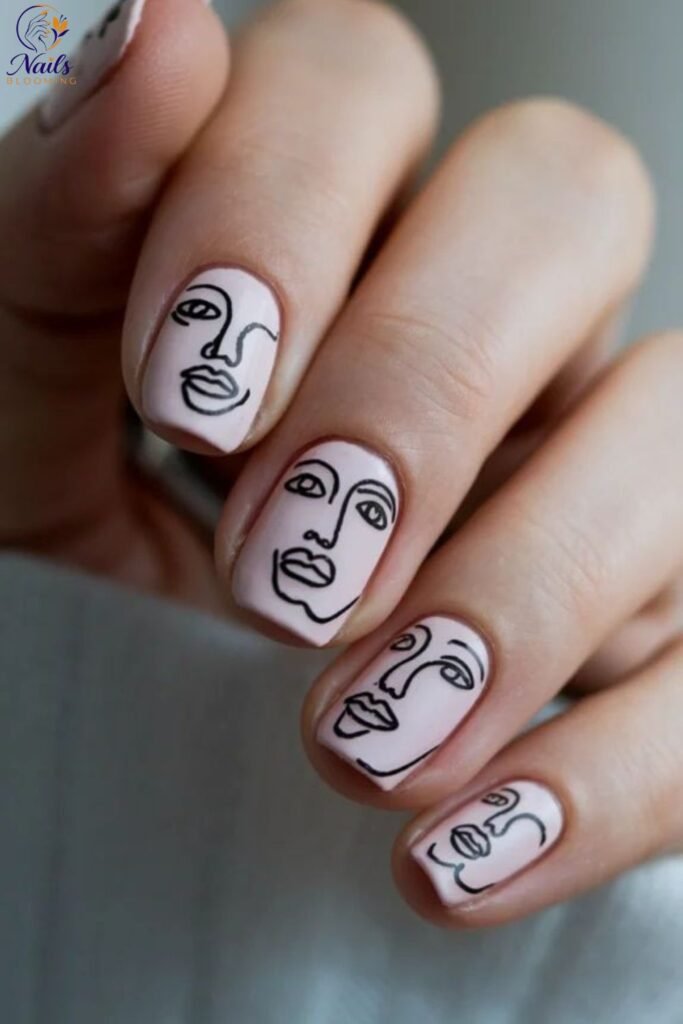
Abstract line art has become one of the most popular techniques within black and white nail designs, using a fine detail brush or dotting tool to create swirls, geometric patterns, or freeform curved lines against a solid base color. This approach offers considerable creative freedom while still maintaining the sophisticated, high contrast appeal that defines this color combination.
This particular style tends to work especially well for those newer to nail art, since imperfections in abstract, freeform designs read as intentional artistic choices rather than mistakes, unlike more precise, symmetrical patterns where any unevenness becomes considerably more noticeable and harder to disguise.
A helpful example: someone practicing abstract line art for the first time might find that starting with simple, single curved lines on a white base, rather than attempting complex, multi layered patterns immediately, produces more consistently satisfying results while building the steadier hand and confidence more intricate designs eventually require.
A fine, long bristled nail art brush makes a considerable difference in execution quality for this technique specifically, since standard polish brushes are typically too wide and imprecise for the detailed linework abstract black and white nail designs depend on for their clean, artistic finish.
Geometric Patterns for Precision and Structure
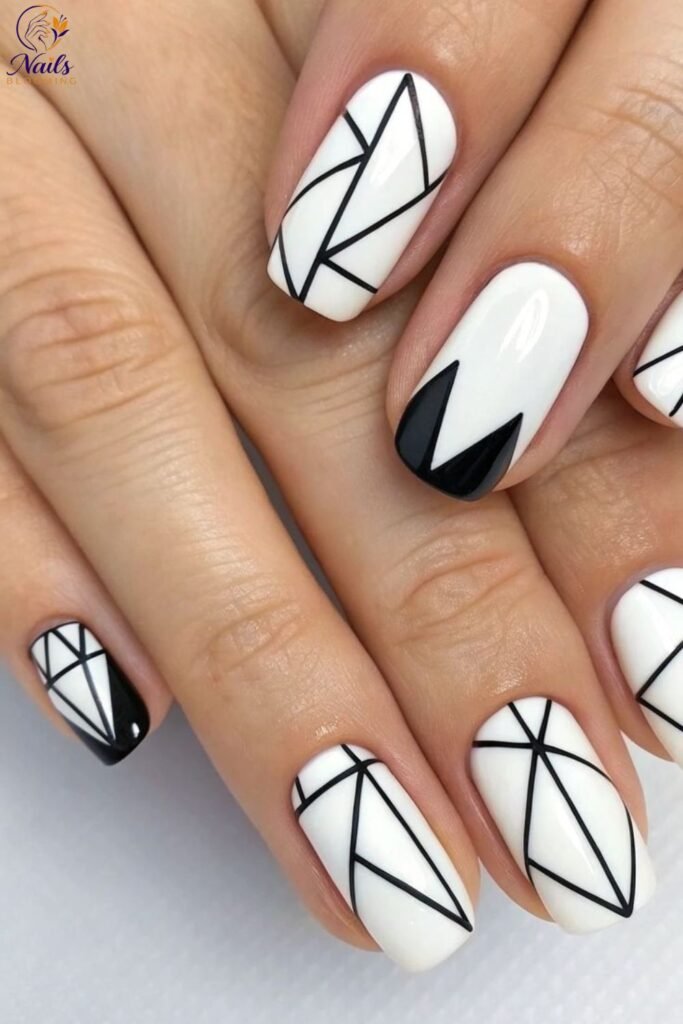
Geometric black and white nail designs, featuring triangles, stripes, checkerboard patterns, or angular shapes, showcase this color combination’s high contrast potential particularly well, since sharp, defined edges photograph and read considerably more crisply in black and white than they might in softer, less contrasting color pairings.
Achieving genuinely clean geometric lines typically requires nail art tape or vinyl stencils specifically designed for this purpose, since freehand geometric precision proves considerably more challenging than abstract, organic patterns where minor imperfections blend more naturally into the overall design.
A helpful example: someone attempting a checkerboard pattern freehand often finds achieving perfectly even, consistently sized squares considerably more difficult than using pre cut nail vinyl specifically designed for this pattern, which provides genuine precision that hand painting alone typically can’t match without extensive practice and a very steady hand.
Geometric black and white nail designs also tend to hold up particularly well over time in terms of visual appeal, since the sharp lines and defined shapes remain visually interesting even as the manicure experiences some natural wear, unlike more delicate, detailed designs that can look considerably more compromised by even minor chipping.
Marble Effect for Elegant, Organic Texture
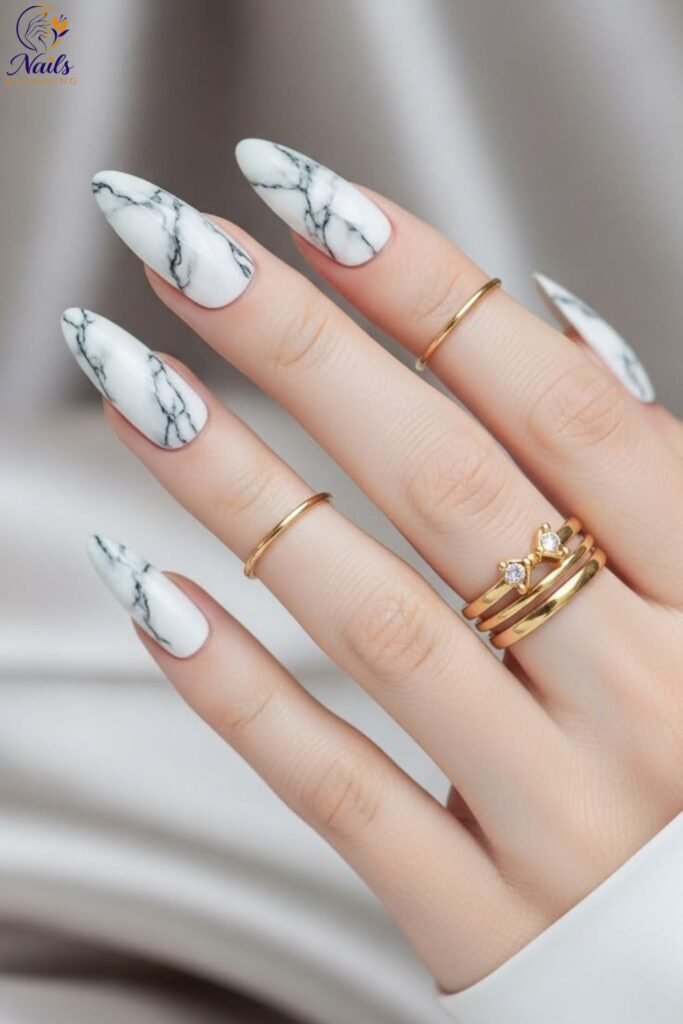
Marble effect black and white nail designs create an elegant, organic look that mimics natural stone veining, offering a softer, more fluid alternative to the sharper geometric or line art styles discussed elsewhere in this guide. This technique typically involves dragging a thin brush or toothpick through wet black polish over a white base to create natural looking veined patterns.
This particular technique benefits from working relatively quickly, since the marbling effect depends on manipulating the polish while it remains wet enough to blend and drag naturally. Waiting too long between applying the black polish and creating the marble pattern often results in polish that’s begun setting, making it considerably harder to achieve the fluid, natural looking veining this design depends on.
A helpful example: someone attempting marble nail art for the first time might find working on one nail at a time, rather than applying black polish to all ten nails before starting the marbling technique, produces considerably better results, since this approach ensures the polish remains genuinely wet and workable throughout the entire marbling process.
A top coat applied immediately after achieving the desired marble pattern helps lock in the design before it has a chance to shift or smudge, an important final step specifically for this more delicate, technique dependent style within black and white nail designs.
Polka Dots for Playful, Timeless Charm
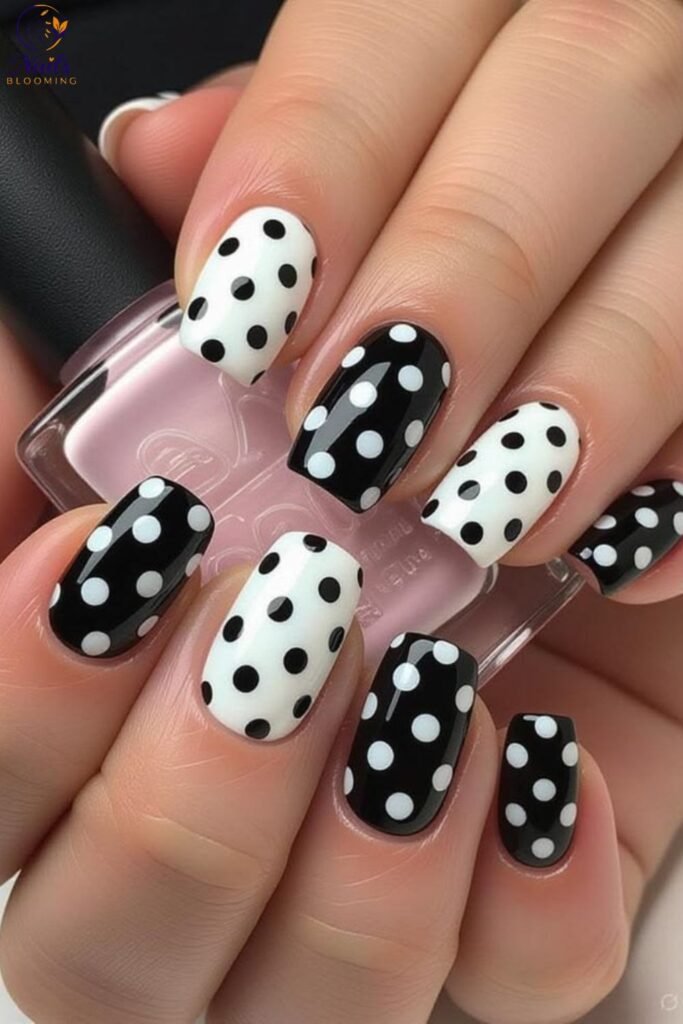
Polka dot black and white nail designs offer a genuinely playful, timeless option that works particularly well for those wanting visual interest without the precision geometric patterns or the artistic freedom abstract line art typically demands. A dotting tool, rather than a standard polish brush, produces considerably more consistent, professional looking dots than attempting this pattern with brush tips alone.
Varying dot size throughout the design, rather than maintaining perfectly uniform dots across every nail, tends to create a more visually interesting, dynamic result than identical, evenly spaced dots repeated exactly the same way on each nail throughout the entire manicure.
A helpful example: someone creating polka dot black and white nail designs might use a larger dotting tool for a few prominent dots near the cuticle, combined with a smaller tool for scattered smaller dots throughout the rest of the nail, creating visual depth and movement that uniform, identically sized dots throughout wouldn’t achieve to the same degree.
This particular style also proves genuinely forgiving for those newer to nail art, since dotting tools provide considerably more control than freehand brushwork, making polka dot designs an accessible entry point into more detailed black and white nail designs overall.
Negative Space Designs for Modern Minimalism
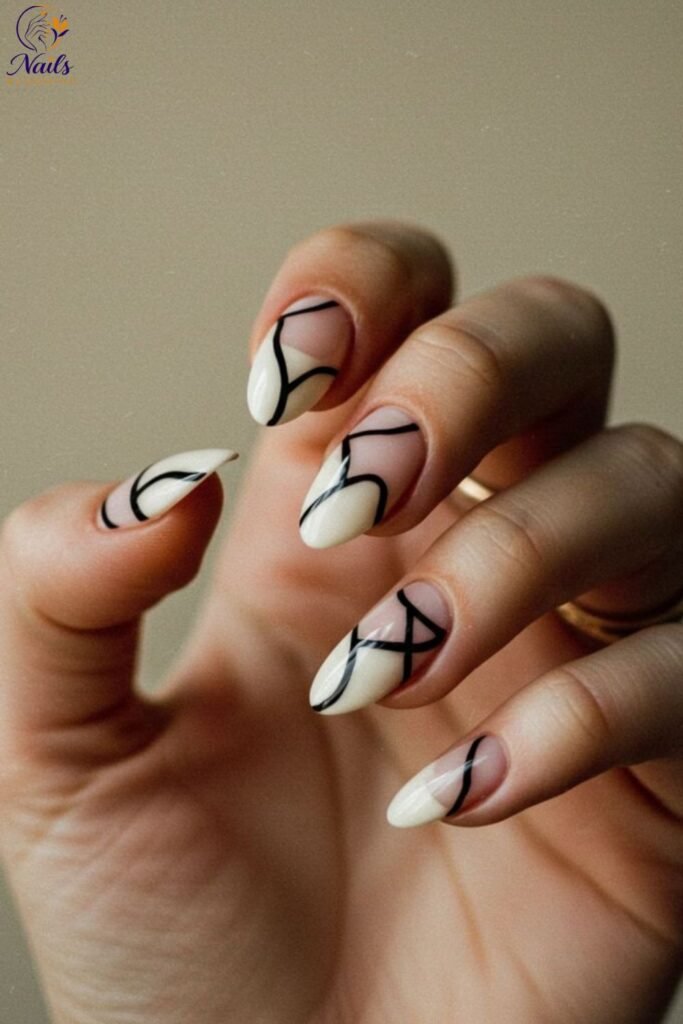
Negative space nail art, which deliberately leaves portions of the natural nail bare rather than fully covering it with polish, pairs particularly well with black and white nail designs, since the natural nail itself often provides a neutral, ivory toned element that complements the stark black and white polish used elsewhere in the design.
This technique requires genuinely careful application planning, since achieving clean edges around the bare, negative space sections demands precision similar to the French tip technique discussed earlier, ensuring the polish stops exactly where intended rather than creating uneven, blurred boundaries.
A helpful example: someone creating a negative space design might paint only the base and one side of the nail in black, leaving a triangular section of bare nail visible, then add a thin white line along the boundary between the polished and unpolished sections to create additional definition and a more finished, intentional appearance.
Sealing negative space designs with a genuinely high quality top coat matters particularly for this style, since the exposed natural nail sections benefit from the same protective, glossy finish as the polished areas to maintain a cohesive, polished overall appearance throughout the manicure’s wear.
Black and White Nail Designs for Short Nails
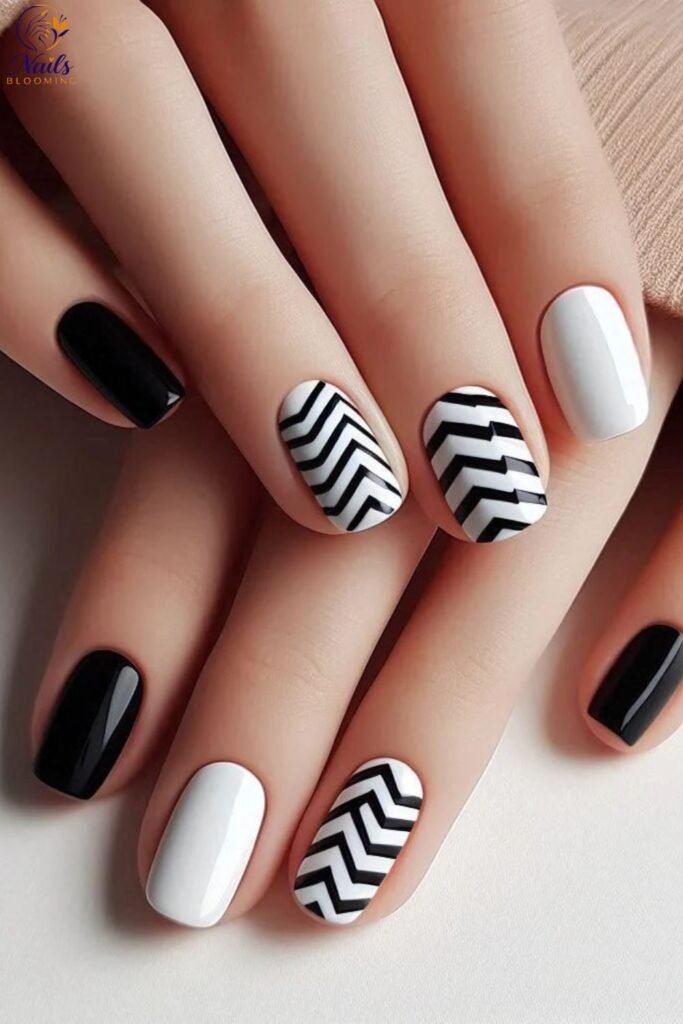
Short nails offer genuine opportunity for striking black and white nail designs, though certain patterns translate more successfully to this length than others. Simple, bold designs solid black accent nails paired with white, or clean geometric lines tend to work particularly well on shorter nail lengths, since there’s less surface area for intricate detail work to fully display.
More complex, multi element designs can sometimes look cramped or difficult to distinguish clearly on shorter nails, making simpler, more graphic approaches genuinely more successful for this length specifically. A single, well placed design element per nail typically reads more clearly than attempting several intricate patterns within limited space.
A helpful example: someone with shorter nails attempting an elaborate marble effect across the entire nail might find the design looks somewhat muddled or unclear due to limited space, while the same person choosing a simple black French tip on a white base achieves a considerably cleaner, more impactful result within their shorter nail length.
Accent nails, where just one or two nails per hand feature a more detailed black and white design while the remaining nails stay simple, also work particularly well for shorter nails, allowing for creative expression without overwhelming the limited available space.
Black and White Nail Designs for Long or Acrylic Nails
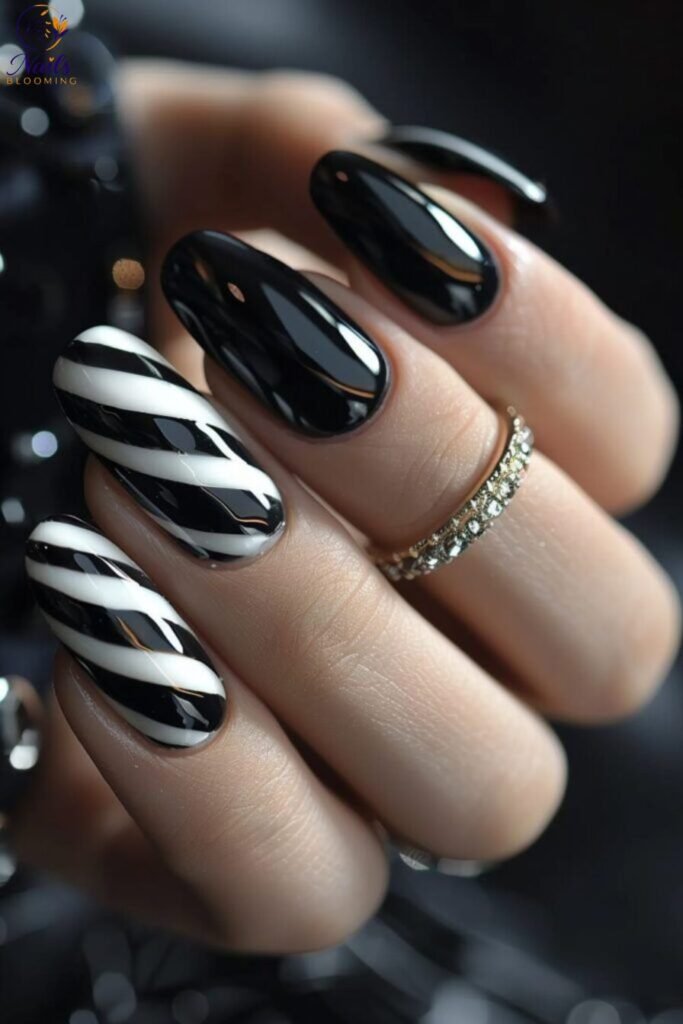
Longer natural nails or acrylic extensions provide considerably more surface area for elaborate black and white nail designs, supporting multi element patterns, detailed line art, and more complex geometric combinations that shorter nails simply can’t accommodate to the same degree of detail and visual impact.
This additional length also allows for design variation across the nail’s length specifically, such as a French tip combined with additional line art or dotting closer to the cuticle, creating a more layered, dimensional design than would be possible within the limited space shorter nails provide.
A helpful example: someone with long acrylic nails might combine a solid black base through the lower half of the nail with intricate white line art through the upper portion, creating a design with genuine depth and visual interest that showcases the additional canvas length provides compared to what’s achievable on shorter, natural nail lengths.
Nail shape also interacts meaningfully with black and white nail designs at longer lengths, since coffin or almond shaped nails provide a different design canvas than square or round shapes, worth considering specifically when planning more elaborate patterns for longer nail lengths.
Achieving Clean Lines: Tools and Techniques
Achieving genuinely clean, professional looking lines remains one of the biggest challenges within black and white nail designs specifically, since the stark contrast between these two colors makes any unevenness or bleeding considerably more visible than it would be with softer, less contrasting color combinations.
Nail art tape, applied before painting and removed once the polish has begun to dry but before it’s fully set, provides genuine precision for straight lines and geometric shapes that freehand painting alone typically can’t match without extensive practice. Removing the tape at the correct moment, neither too early nor too late, significantly affects how clean the final line ultimately appears.
A helpful example: someone removing nail art tape too soon, before the polish has begun setting at all, often finds the wet polish bleeds or smudges as the tape lifts, while removing it too late, after the polish has fully dried, can sometimes cause chipping or peeling along the taped edge. Waiting until the polish looks matte but still feels slightly tacky typically produces the cleanest removal results.
A fine detail brush, kept separate from standard polish application brushes, also makes a considerable difference for freehand elements within black and white nail designs, since this specialized tool provides the control necessary for precise linework that standard brushes simply can’t replicate.
Product Choices That Affect Longevity and Finish
Polish quality genuinely affects how black and white nail designs ultimately look and how long they last, particularly regarding the white polish specifically, since lower quality white formulas can sometimes appear streaky or require multiple coats to achieve genuine, solid opacity compared to higher quality alternatives.
Gel polish tends to produce considerably more durable, chip resistant black and white nail designs than standard polish, particularly valuable for more intricate designs where even minor chipping becomes especially noticeable against the stark color contrast this combination relies on for its visual impact.
A helpful example: someone using a budget white polish requiring three or four coats to achieve solid coverage might find their black and white nail designs look noticeably thicker or less precise than the same design created with a higher quality, more opaque white formula requiring only one or two coats for full coverage.
A genuinely high quality top coat also matters considerably for this particular color combination, since black and white nail designs tend to show scratches and dulling somewhat more visibly than some other color combinations, making a durable, glossy top coat a worthwhile investment for maintaining the design’s crisp, polished appearance.
Common Mistakes to Avoid With Black and White Nail Designs
One frequent mistake involves attempting intricate, detailed designs without proper tools, such as trying to create precise geometric lines using only a standard polish brush rather than nail art tape or a dedicated fine detail brush, often resulting in uneven, imprecise lines that undermine the design’s intended crisp, high contrast appeal.
Applying polish too thickly is another common error, particularly with white polish specifically, since attempting to achieve full opacity in a single thick coat often results in a lumpy, uneven finish rather than the smooth, glossy appearance thinner, multiple coats typically achieve considerably more successfully.
Rushing the drying time between design elements remains a frequently repeated mistake as well, since layering wet polish over insufficiently dried polish often causes smudging or unintended blending between colors, particularly problematic for black and white nail designs where clean separation between the two colors is often central to the design’s overall success.
Finally, skipping a genuine base coat can undermine even well executed black and white nail designs, since this foundational step helps prevent staining from the black polish specifically while also providing better overall adhesion and longevity for the entire design.
The Future of Black and White Nail Designs
Black and white nail designs continue to evolve alongside broader nail art trends toward increasingly precise, professional quality at home application, as more accessible tools like nail art tape, dotting tools, and fine detail brushes become widely available to those creating these designs outside professional salon settings.
There’s also growing interest in combining black and white nail designs with subtle textural elements, such as matte and glossy finish contrasts within the same design, adding dimensional interest without introducing additional color that might dilute this combination’s signature high-contrast appeal.
Gel and dip powder formulations specifically are likely to continue improving in opacity and precision, making genuinely clean, professional looking black and white nail designs increasingly achievable for those working outside professional salon settings, narrowing the gap between at home and salon quality results.
Looking ahead, increased availability of pre designed nail art stickers and vinyl specifically created for popular black and white patterns is likely to continue making intricate, precisely executed designs more accessible to those without extensive freehand nail art skill or experience, broadening who can successfully create these striking, high contrast looks.
Conclusion
Black and white nail designs offer a genuinely timeless, versatile way to create striking, high contrast nail art suited to nearly any occasion or personal style. From classic French tips and abstract line art to geometric patterns and elegant marbling, there’s a technique suited to every skill level and nail length. If you’ve been considering this look, use these ideas as a starting point for your next manicure.

Alex Parker is a nail and beauty enthusiast with 5 years of experience in nail art and beauty trends. Through NailsBlooming.com, Alex shares fresh nail designs, trendy colors, seasonal styles, and simple manicure inspiration. The goal is to make finding beautiful and creative nail ideas easy for everyone.


