
Simple Nail Designs for Beginners at Home: The Complete Guide to Tools, Technique, and Confidence
Simple nail designs for beginners at home remain one of the most searched manicure topics precisely because learning to paint your own nails well requires genuinely different skills than appreciating a finished salon look. Unlike professional application, where technicians rely on years of practiced technique, simple nail designs for beginners at home need to account for shaky hands, limited tools, and the genuine learning curve that comes with any new skill.
This guide goes beyond a simple gallery of simple nail designs for beginners at home. It explains how tool selection, hand positioning, and even practice sequencing should influence your approach to learning at-home nail art, along with details most articles skip entirely like why certain techniques that look easy in tutorial videos require more preparation than beginners realize, and why beginner-friendly designs need different forgiveness built into the technique itself. Whether you’re painting your nails for the first time or building on skills you’re still developing, this is the deeper, more practical guide.
Why Simple Nail Designs for Beginners at Home Need Forgiveness Built Technique
Simple nail designs for beginners at home require techniques with genuine built-in forgiveness, largely because beginners haven’t yet developed the steady hand control that professional application depends on. A technique that looks simple when a trained technician demonstrates it can still prove genuinely challenging without the muscle memory that comes from repeated practice.
This distinction matters because it directly affects which specific techniques actually suit true beginners versus which ones only appear simple on the surface. Techniques using tools like dotting tools, striping tape, or sponges tend to produce considerably more consistent results for simple nail designs for beginners at home than freehand painting, since these tools compensate for hand shakiness in ways a standard brush cannot.
A helpful example: someone attempting a freehand floral design as their very first nail art project might find the uneven petals and shaky lines genuinely discouraging, even though the design looked achievable in a video tutorial. Starting instead with a tool-assisted technique, like dotting tool flowers or sponge-applied ombre, produces considerably more satisfying results for true beginners within simple nail designs for beginners at home.
Because simple nail designs for beginners at home also benefit from proper lighting and a steady surface, setting up a dedicated, well-lit workspace before starting helps improve precision considerably more than attempting nail art in poor lighting or an unstable position.
Click It: https://nailsblooming.com/classy-short-nail-designs-for-women/
Classic Solid Color Manicure

A single, well-applied solid color remains the most foundational simple nail design for beginners at home, teaching genuinely essential skills like cuticle preparation, even coat application, and clean edges before attempting anything more elaborate. This particular starting point matters because mastering basic application creates the foundation every other technique builds upon.
Choosing the right formula matters considerably here, since a well-pigmented, slightly thicker polish tends to be more forgiving for beginners than a thin, watery formula that requires more coats and increases the risk of streaking within simple nail designs for beginners at home.
A helpful example: someone brand new to at-home manicures who starts with an elaborate design before mastering basic solid color application often finds themselves frustrated by compounding mistakes, since poor base application undermines any detail work added afterward. Starting with solid color specifically, rather than jumping ahead, builds the fundamental skills simple nail designs for beginners at home depend on for later success.
Practicing the three-stroke application method, one stroke down the center and one on each side, helps beginners develop the muscle memory needed for smooth, even coverage before attempting more advanced techniques.
Dotting Tool Flowers

Using a dotting tool, or even the rounded end of a bobby pin, to create simple five-dot flowers introduces beginners to nail art without requiring any freehand painting skill whatsoever. This particular technique relies entirely on consistent dot placement, making it one of the most approachable simple nail designs for beginners at home.
This particular approach tends to work especially well because the dotting tool naturally creates uniform, rounded shapes that would be considerably harder to achieve with a standard brush, removing much of the skill barrier that intimidates true beginners within simple nail designs for beginners at home.
A helpful example: someone wanting to try nail art for the first time without investing in specialized brushes often finds that a simple dotting tool, arranging five dots in a flower pattern with a smaller center dot, achieves a genuinely cute result with minimal practice required. This makes it one of the most accessible simple nail designs for beginners at home for those wanting to try actual nail art.
Using a toothpick as a makeshift dotting tool works in a pinch, though investing in an actual dotting tool set provides more consistent, varied dot sizes for future designs.
Striping Tape Geometric Lines

Using striping tape to create clean, straight lines or simple geometric patterns teaches beginners precision without requiring steady freehand painting skill, making this one of the more forgiving simple nail designs for beginners at home. This particular technique relies on the tape itself to create crisp edges that would be genuinely difficult to replicate by hand.
This particular technique tends to work especially well because the tape can be applied, polish painted over or around it, and then removed before the polish fully dries, revealing clean lines that look considerably more precise than most beginners could achieve freehand within simple nail designs for beginners at home.
A helpful example: someone wanting to add a geometric or minimalist design element to their nails often finds that striping tape makes this considerably more achievable than attempting the same straight lines with just a brush. This makes it one of the more rewarding simple nail designs for beginners at home for those wanting to expand beyond solid colors.
Removing the tape at the correct moment, after the polish has set slightly but before it’s fully dry, prevents the tape from pulling up wet polish or leaving jagged edges.
Sponge Applied Ombre
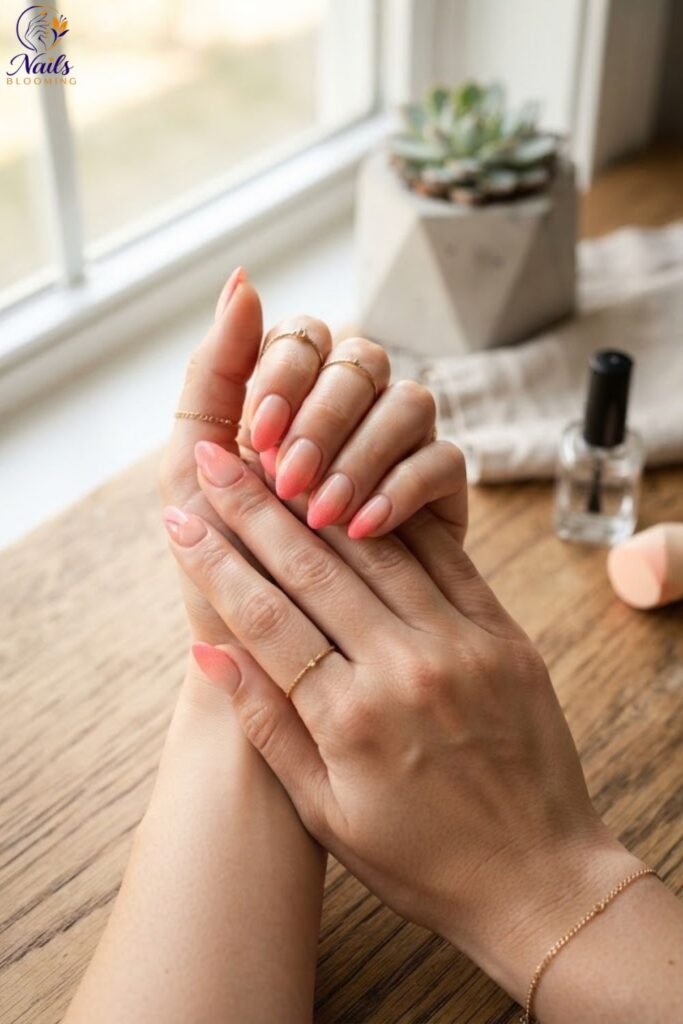
Creating a soft color gradient using a makeup sponge introduces beginners to multi-color design without requiring precise blending skill, since the sponge’s texture naturally creates a forgiving, soft transition between colors. This particular technique ranks among the more popular simple nail designs for beginners at home specifically because mistakes blend into the overall soft effect rather than standing out.
This particular approach tends to work especially well using two closely related colors, since shades within the same tonal family blend more forgivingly than starkly contrasting colors, which require more precise technique to avoid a harsh, uneven transition within simple nail designs for beginners at home.
A helpful example: someone wanting to try an ombre design but worried about their lack of experience often finds that the sponge technique is considerably more forgiving than expected, since dabbing imperfectly still produces a soft, blended look rather than an obvious mistake. This makes it one of the more confidence-building simple nail designs for beginners at home for expanding skill gradually.
Applying the colors to the sponge first, then dabbing onto the nail in a slightly different position each time, helps create natural variation that looks intentional rather than mechanically uniform.
Single Accent Nail Design
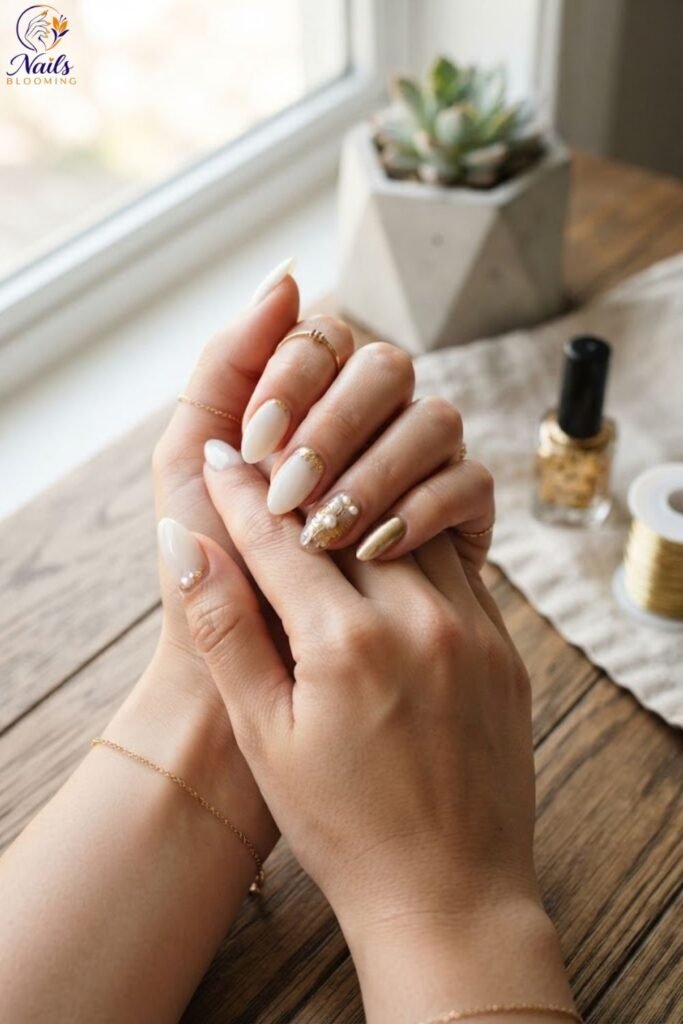
Painting nine nails in one solid color and reserving just one nail for a slightly more adventurous design, color, or finish allows beginners to experiment without the pressure of executing a complex design across all ten nails. This particular approach significantly reduces the stakes of trying something new within simple nail designs for beginners at home.
This particular technique tends to work especially well for beginners building confidence gradually, since even if the accent nail doesn’t turn out perfectly, the overall manicure still looks cohesive and intentional thanks to the nine simpler, solid-color nails surrounding it.
A helpful example: someone wanting to try glitter, a new color, or a simple pattern for the first time often finds that limiting the experiment to just one accent nail makes the attempt feel considerably lower-risk. This makes it a genuinely practical choice among simple nail designs for beginners at home for building confidence incrementally.
Choosing the ring finger for the accent nail, a placement long favored in nail art for its natural visual prominence, tends to draw attention to the experimental design most effectively.
French Tip with Nail Guides
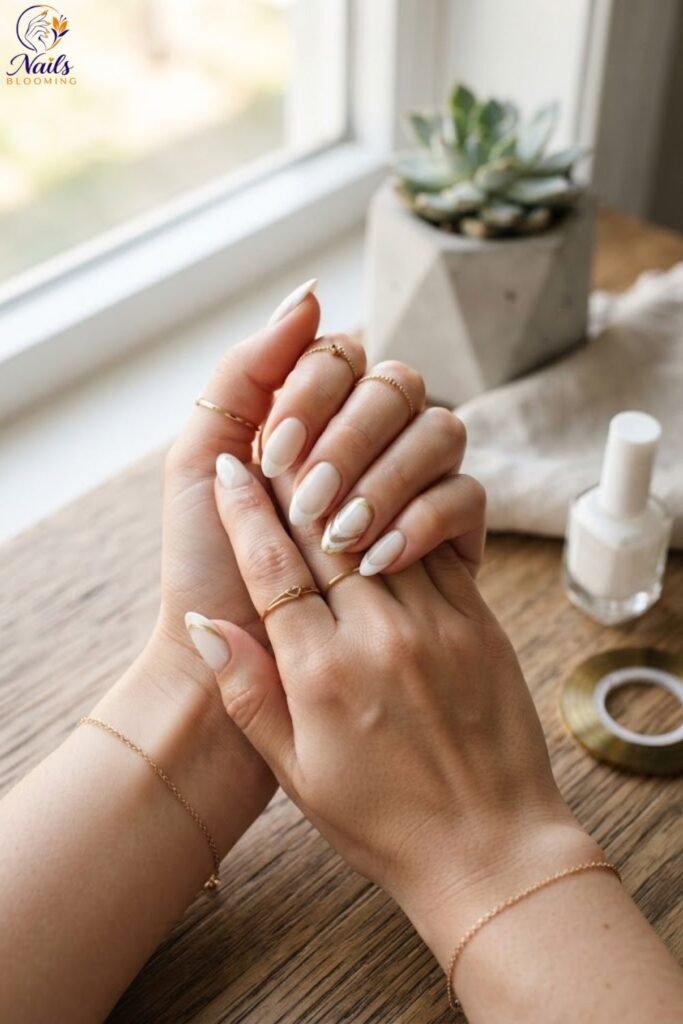
Using adhesive French tip guides, rather than attempting to freehand the classic white tip line, makes this timeless design genuinely achievable for beginners who haven’t yet developed steady-handed precision. This particular tool-assisted approach removes much of the difficulty that makes freehand French tips notoriously challenging for new nail art enthusiasts.
This particular technique tends to work especially well because the guides create a consistent, symmetrical tip line across all ten nails, an outcome that would require considerably more practice to achieve freehand within simple nail designs for beginners at home.
A helpful example: someone who has tried and failed to freehand a French manicure in the past often finds that switching to adhesive guides solves the consistency problem entirely, since the guide does the precision work that freehand painting demands. This makes it one of the more satisfying simple nail designs for beginners at home for those wanting a classic, polished look.
Pressing the guide down firmly at the edges before painting helps prevent polish from seeping underneath, which would otherwise create a blurred, imprecise tip line.
Simple Nail Designs for Beginners at Home with Nail Decals
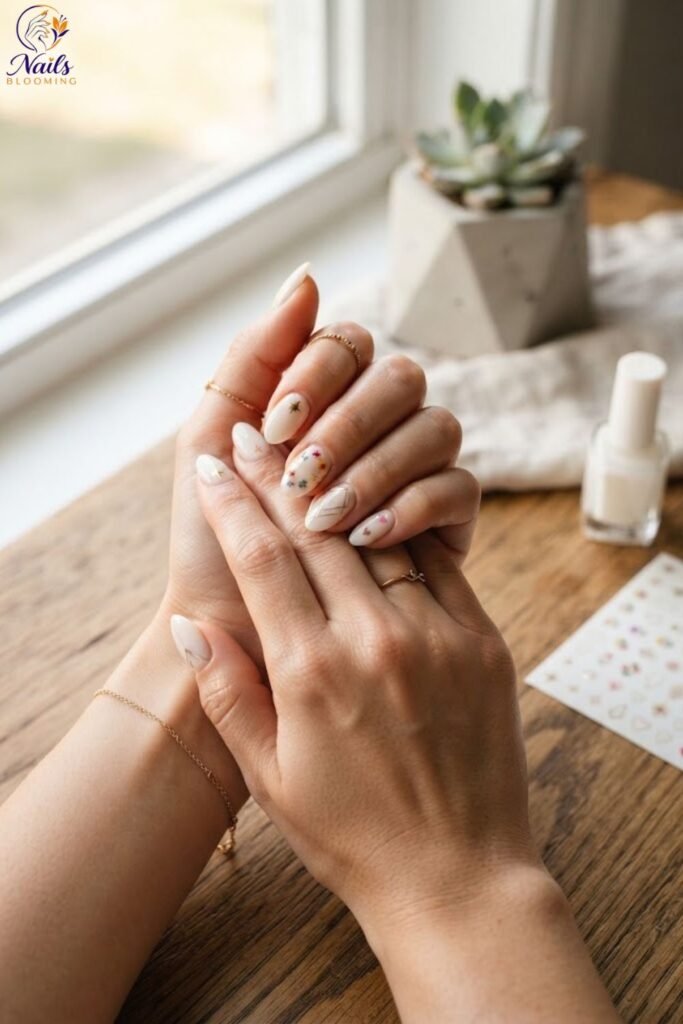
Applying pre-designed nail decals or stickers allows beginners to achieve detailed, intricate-looking designs without any actual painting or drawing skill required. This particular approach bridges the gap between a plain solid color and more advanced hand-painted nail art, making it one of the most accessible simple nail designs for beginners at home.
This particular technique tends to work especially well for those wanting variety without investing significant time in skill development, since decals offer instant, consistent designs that would otherwise require considerable practice to replicate by hand within simple nail designs for beginners at home.
A helpful example: someone wanting a detailed floral or patterned look without years of practiced nail art skill often finds that quality decals achieve a genuinely impressive result in a fraction of the time hand-painting would require. This makes it one of the more efficient simple nail designs for beginners at home for those wanting variety with minimal skill investment.
Applying decals to slightly tacky, not fully dried polish, helps them adhere smoothly without air bubbles, then sealing with a top coat protects the design from lifting.
Matte Top Coat Transformation
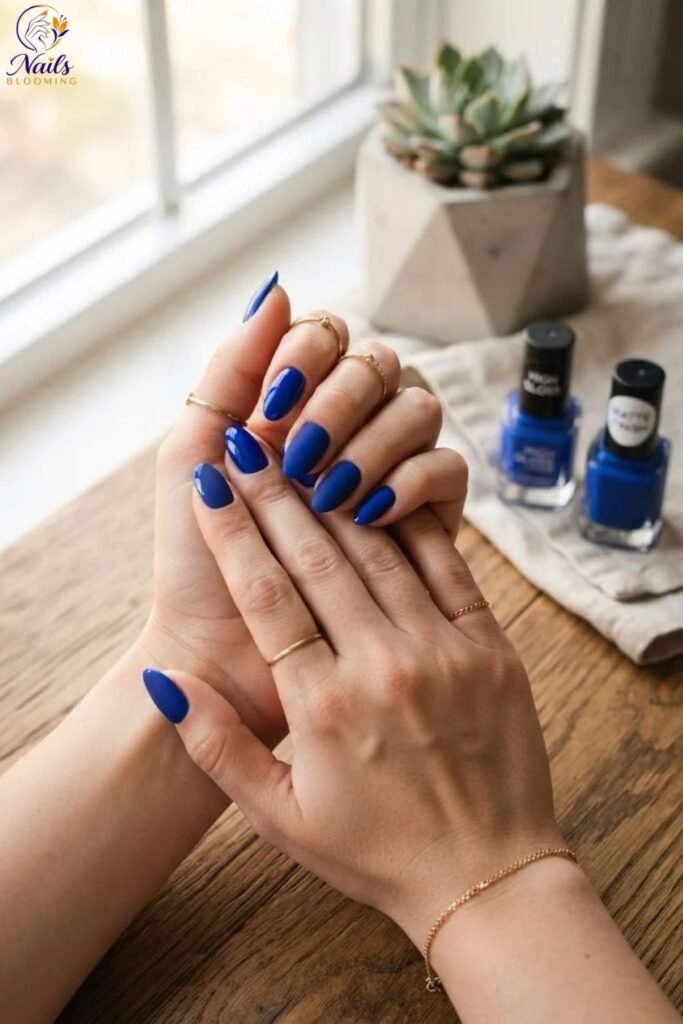
Applying a matte top coat over any solid color creates an entirely different finished look using a technique that requires zero additional skill beyond standard top coat application. This particular approach allows beginners to create variety and visual interest without needing to master any new painting technique within simple nail designs for beginners at home.
This particular technique tends to work especially well for beginners wanting to feel like they’re trying something new without the pressure of learning an entirely new skill, since switching from glossy to matte finish fundamentally changes the manicure’s appearance with the same level of effort.
A helpful example: someone wanting their simple nail designs for beginners at home to feel more varied and interesting over time often finds that alternating between glossy and matte top coats on the same base colors creates genuine variety without requiring new techniques. This makes it one of the easiest ways to expand a beginner’s nail design repertoire.
Applying the matte top coat in one thin, even layer, rather than multiple layers, helps avoid the slightly cloudy appearance that can occur with overly thick matte application.
Negative Space Moon Manicure
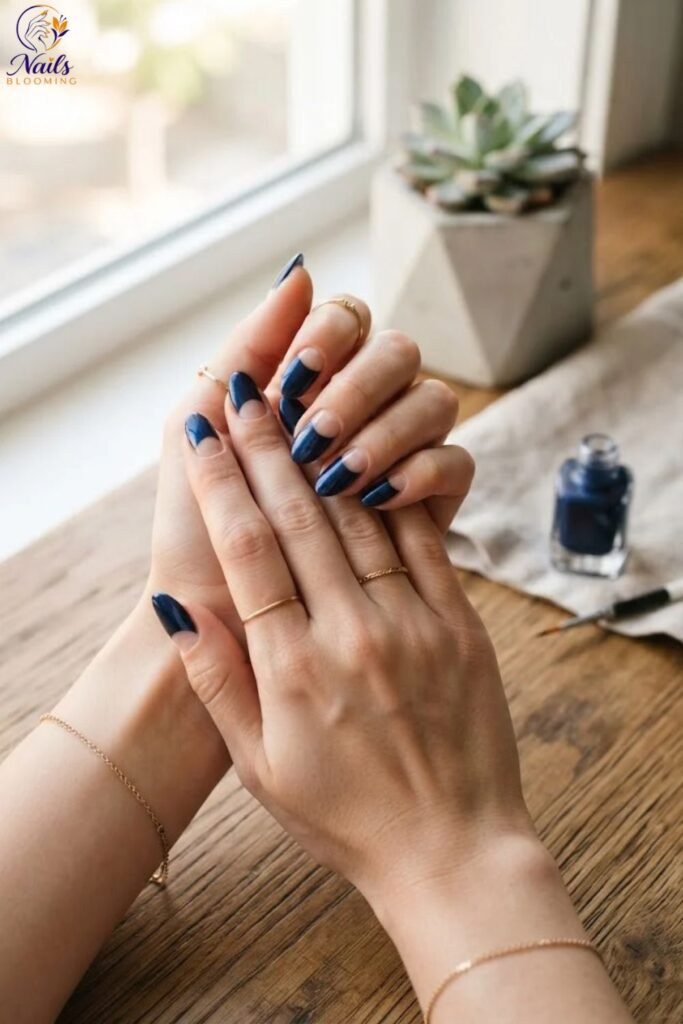
Leaving a small, unpainted crescent near the cuticle, using a hole reinforcement sticker as a guide, creates a striking design that’s considerably more achievable for beginners than it initially appears. This particular technique relies on an office supply item most people already have, removing any need for specialized nail art tools.
This particular approach tends to work especially well because the sticker creates a perfectly rounded, symmetrical negative space shape that would be genuinely difficult to paint around freehand, making this one of the more clever simple nail designs for beginners at home.
A helpful example: someone wanting a design that looks more advanced than their current skill level often finds that the moon manicure, using a simple office sticker as a stencil, achieves a result that looks considerably more sophisticated than the actual effort required. This makes it one of the most rewarding simple nail designs for beginners at home relative to the skill involved.
Removing the sticker carefully once the polish has set, rather than while still wet, helps prevent the polish from smudging or pulling away from the clean negative space edge.
Simple Nail Designs for Beginners at Home with a Single Fine Line

Using striping tape to add one thin line across or along the nail introduces beginners to subtle detail work without requiring freehand precision. This particular technique builds directly on skills learned from the geometric striping tape design, applying the same tool-assisted approach to a more understated final result.
This particular technique tends to work especially well as a true beginner’s first step beyond solid color, since adding just one line requires minimal additional time while still teaching the fundamentals of tape-based precision within simple nail designs for beginners at home.
A helpful example: someone wanting to take their very first step beyond basic solid color polish often finds that a single fine line, applied with striping tape, offers a manageable, low-pressure way to add visual interest. This makes it one of the most logical starting points among simple nail designs for beginners at home for those building skill progressively.
Using a contrasting metallic or gold line against a neutral base creates a subtle, elevated result even at this most basic level of nail art skill.
Choosing Simple Nail Designs for Beginners at Home by Skill Progression
Skill progression plays a meaningful role in how beginners should approach simple nail designs for beginners at home, a detail generic style roundups often skip entirely. True first-timers tend to benefit most from mastering solid color application and basic tool-assisted techniques, like striping tape lines or dotting tool flowers, before attempting anything requiring freehand precision.
Those with some basic experience specifically tend to benefit from building toward slightly more advanced techniques, like sponge ombre or French tip application, since these require combining multiple skills learned from earlier, simpler designs within simple nail designs for beginners at home.
A helpful example: someone who has only painted solid colors so far might find that jumping straight to freehand floral nail art feels genuinely overwhelming and discouraging. Progressing instead through dotting tools, then striping tape, then sponge techniques builds confidence incrementally among simple nail designs for beginners at home, making each new skill feel achievable rather than intimidating.
Practicing each new technique on a few nails before committing to a full set helps beginners gauge their actual skill level honestly before investing time in an entire manicure.
Common Mistakes to Avoid With Simple Nail Designs for Beginners at Home
One of the most frequent mistakes is attempting freehand designs before mastering basic solid color application, resulting in compounding frustration when neither the base nor the detail work turns out as expected. Starting with foundational skills helps avoid this common issue within simple nail designs for beginners at home.
Another common error involves skipping base coat and top coat, focusing only on the color itself, which leads to staining, chipping, and a less polished overall appearance regardless of how well the design itself turned out. Using proper base and top coat produces more consistently professional-looking results.
Neglecting proper drying time between steps is another frequently repeated mistake, since rushing to the next layer or detail before the previous one has set often causes smudging that ruins otherwise successful technique. Allowing adequate drying time between each step helps simple nail designs for beginners at home turn out cleaner.
Finally, using too much polish on the brush at once undermines even experienced application, let alone a beginner’s attempt, since excess polish pools unevenly and takes considerably longer to dry. Wiping excess polish from the brush before applying helps maintain thin, even, manageable coats.
The Future of Simple Nail Designs for Beginners at Home
Simple nail designs for beginners at home continue to evolve alongside broader advances in beginner-friendly tool accessibility, with more affordable dotting tools, striping tape, and nail guides becoming widely available at drugstores and online retailers specifically marketed toward at-home nail art beginners.
There’s also a growing emphasis on tutorial content specifically designed for true beginners, with more creators breaking down techniques into genuinely manageable steps rather than assuming existing skill, reflecting broader recognition that simple nail designs for beginners at home benefit from patient, incremental instruction.
Product technology is advancing alongside this trend as well, with more brands developing quick-dry, forgiving polish formulas specifically designed to reduce the smudging and streaking that often discourages beginners from continuing to practice.
Looking ahead, augmented reality nail art apps are beginning to help beginners preview how different simple nail designs for beginners at home might look on their own hands before committing to polish, potentially building confidence before beginners even pick up a brush.
Conclusion
Simple nail designs for beginners at home prove that genuinely beautiful manicures don’t require professional training, just the right tools and a willingness to practice. From dotting tool flowers to tape assisted French tips, there’s an option here suited to every skill level, starting from true beginner. The key is building skills progressively rather than rushing ahead. Ready to try one of these simple nail designs for beginners at home Grab your polish and tools, and start practicing these techniques today.

Alex Parker is a nail and beauty enthusiast with 5 years of experience in nail art and beauty trends. Through NailsBlooming.com, Alex shares fresh nail designs, trendy colors, seasonal styles, and simple manicure inspiration. The goal is to make finding beautiful and creative nail ideas easy for everyone.


