
French Tip Nails: The Complete Guide to Technique, Color, and Shape
French tip nails remain one of the most consistently requested manicure styles precisely because the classic two tone structure already carries a naturally polished, timeless quality before any additional variation is even applied. Unlike trend driven nail art that cycles quickly, French tip nails have remained a reliable favorite for decades, which explains why this style continues appearing across salons and social media even as other trends come and go.
This guide goes beyond a simple gallery of French tip nails. It explains how tip width, nail shape, and even application order should influence your approach to this classic style, along with details most articles skip entirely like why certain tip widths that look elegant on longer nails can appear clunky on shorter ones, and why French tip nails need different precision consideration than solid color manicures. Whether you’re wearing French tips for the first time or refining a technique you already use, this is the deeper, more practical guide.
Why French Tip Nails Need Width Specific Application
French tip nails require more width-specific application consideration than solid color manicures, largely because the tip line’s proportion relative to the overall nail significantly affects how polished or awkward the final result appears. A tip width that looks balanced on a longer nail can easily overwhelm a shorter one, throwing off the entire manicure’s proportions if not adjusted correctly.
This distinction matters because it directly affects which specific tip widths genuinely flatter different nail lengths versus which ones make the nail appear disproportionate. A noticeably thinner tip line tends to complement shorter nails by leaving more of the natural nail bed visible, while a traditional, thicker tip width suits longer nails better, where there’s more surface area to balance the proportion within French tip nails.
A helpful example: someone applying a tip width designed for longer almond or coffin nails directly onto a short square shape might find the design looks disproportionate, with the white tip consuming nearly half the visible nail. Scaling the tip line specifically to match nail length, rather than using a single standard width across all lengths, produces a considerably more polished, flattering result.
Because French tip nails also show wear and regrowth more quickly at the tip specifically, since this is where daily wear concentrates most, regular touch-ups help maintain the crisp, clean line this style depends on for looking genuinely polished.
Read More: https://nailsblooming.com/gel-nail-designs/
Classic White Tip French Manicure
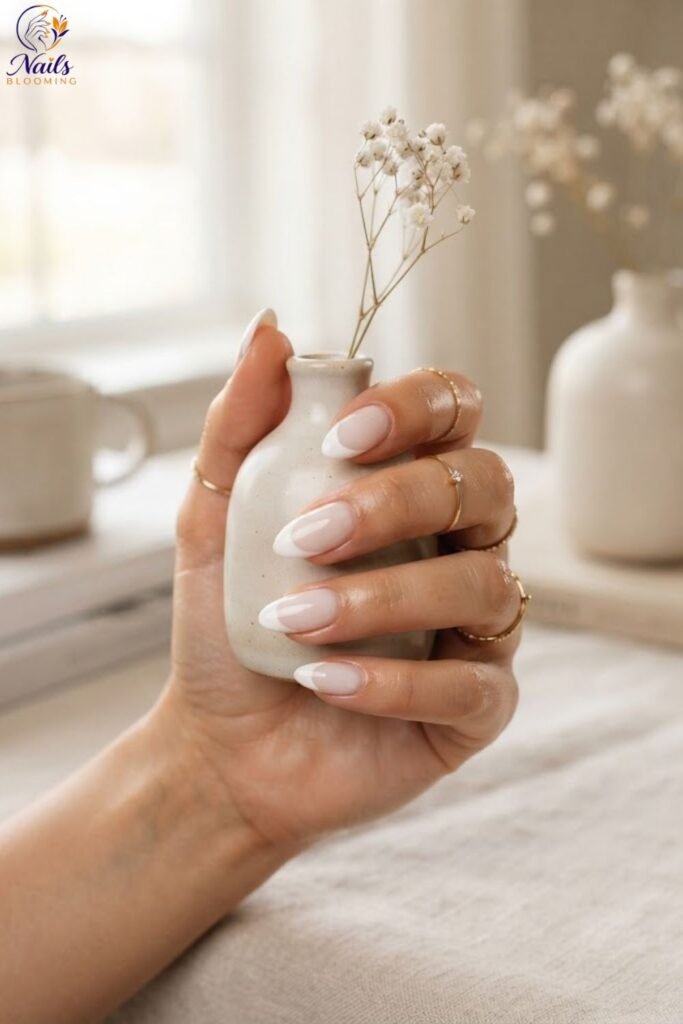
The traditional white tip paired with a natural or nude base remains the most iconic version of French tip nails, offering crisp, clean contrast that has defined this style since its inception. This particular combination has remained relevant across decades of shifting nail trends precisely because the classic white-on-nude pairing never feels genuinely dated.
Choosing the right nude base shade matters considerably here, since a base too pink or too yellow can clash with a stark white tip, while a genuinely neutral, skin-matching nude creates the most seamless, flattering contrast within French tip nails. Testing the base shade against your actual nail bed, rather than relying on the bottle’s appearance alone, helps ensure a cohesive match.
A helpful example: someone wanting French tip nails that feel timeless rather than tied to any specific trend often finds that the classic white tip and nude base combination remains reliably elegant regardless of current nail art trends. This nuance is a detail many general nail guides overlook when discussing French tip nails specifically.
A glossy top coat applied as the final step tends to elevate this combination further, since the shine enhances the crisp white tip’s visibility and overall polished appearance.
Colored Tip French Manicure
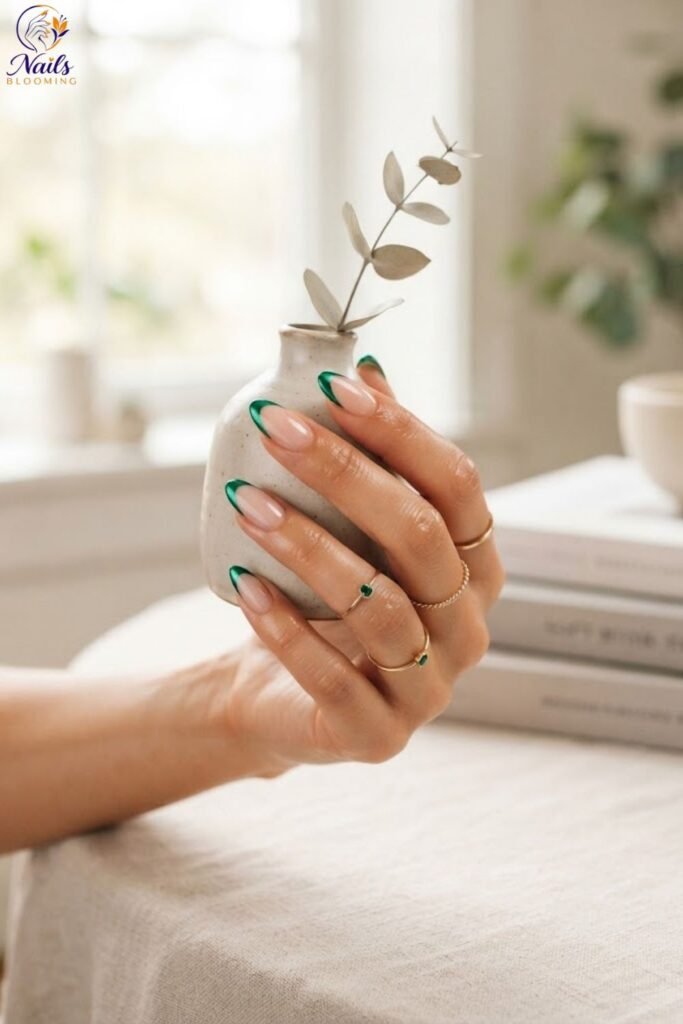
Swapping the traditional white tip for a bold or pastel color creates a genuinely modern variation among French tip nails, offering personalization while still maintaining the recognizable two-tone structure. This particular update has grown significantly in popularity as nail trends move away from strictly neutral, traditional palettes.
This shade family also proves genuinely versatile, since colored tips can be adjusted seasonally, using pastel shades like lavender or mint in spring, then shifting to burgundy or forest green for fall, all while keeping the same underlying French tip nails structure intact throughout the year.
A helpful example: someone wanting to keep up with color trends without changing their entire nail shape or base often finds that colored French tips solve this need effectively, since only the tip color changes between appointments while the overall structure stays consistent and familiar. This makes it one of the more adaptable French tip nails ideas for anyone who likes seasonal variety.
Choosing a tip color that contrasts clearly against the base underneath helps maintain the recognizable French manicure structure, even when the color itself moves away from traditional white.
Micro French Tips
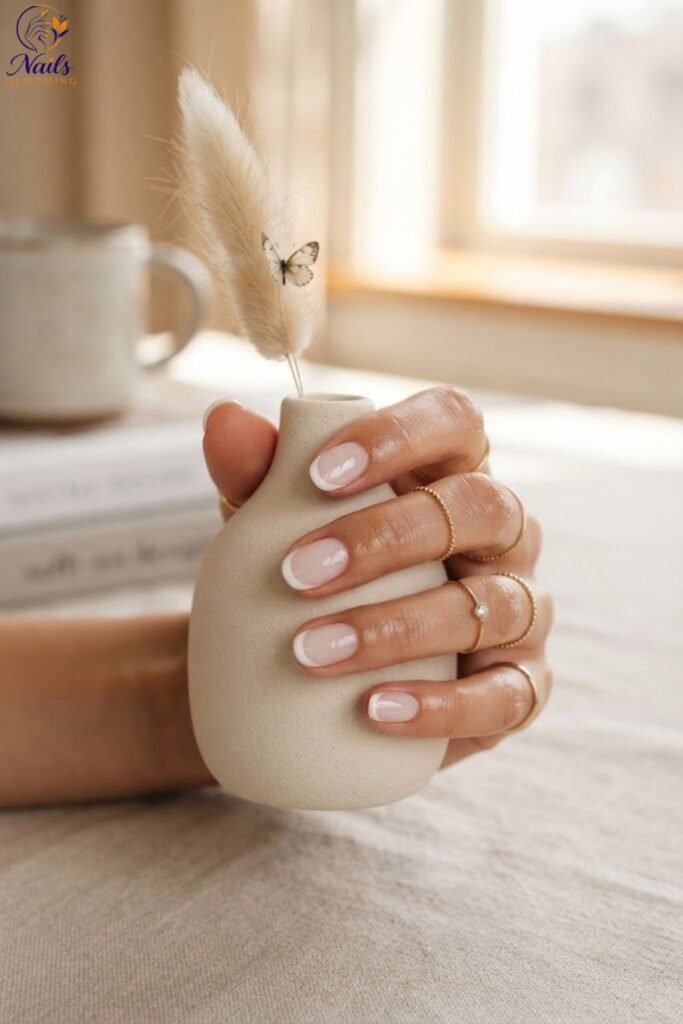
Shrinking the traditional tip line down to a barely-there, ultra-thin strip creates one of the most contemporary versions of French tip nails, offering a scaled-down approach that feels considerably more subtle and modern than the classic thicker tip. This particular technique relies on precision rather than boldness, making the thin line both achievable and consistently elegant.
This particular approach tends to work especially well across a wide range of nail lengths, since the thin tip line adds definition without overwhelming the nail’s proportions the way a traditional, thicker tip might, particularly on shorter or medium-length nails within French tip nails.
A helpful example: someone wanting a classic French manicure updated for a more minimalist, contemporary aesthetic often finds that shrinking the tip width considerably, rather than using the traditional thicker line, achieves genuine sophistication while still feeling clearly recognizable as French tip nails. This makes it one of the more universally flattering variations across different nail shapes and lengths.
Using striping tape to mask off the tip section before applying polish helps achieve the precise, consistent thinness this particular technique depends on for a clean result.
French Tip Nails with a Double Line Accent

Adding a second, thinner line just above the traditional tip creates a genuinely detailed yet still classic variation among French tip nails, offering added visual interest without requiring elaborate freehand nail art skill. This technique relies on two clean, parallel lines rather than intricate painting, making it accessible even for those newer to detailed nail styling.
This particular approach tends to work especially well when the second line uses a contrasting color, like a thin black or gold line above a classic white tip, since the added color creates definition that elevates the overall design within French tip nails without overwhelming the classic structure.
A helpful example: someone wanting more visual interest than a standard tip but hesitant about elaborate nail art often finds double-line tips offer a genuine middle ground, providing added detail without requiring intricate skill or excessive time in the chair. This makes it a popular, practical choice among French tip nails for those wanting subtle sophistication.
Using striping tape for both lines, applied one at a time and allowed to dry between applications, helps maintain the clean precision this particular technique depends on.
Milky White Base with French Tips
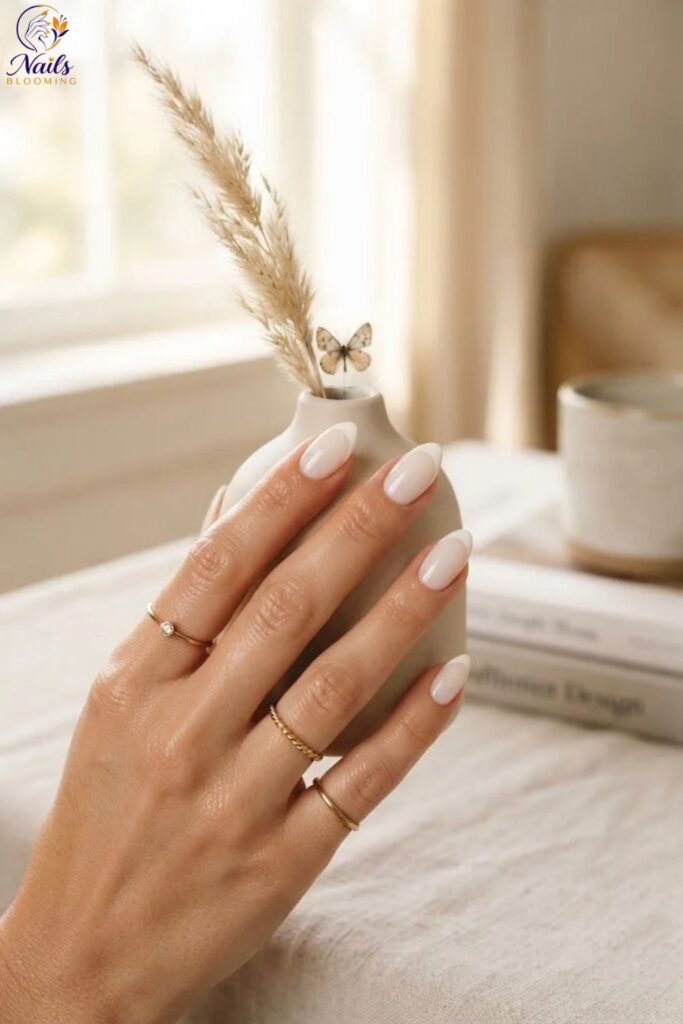
Pairing a soft, semi-sheer milky white base with the traditional tip creates one of the softest, most contemporary versions of French tip nails, offering subtle depth that reads as polished without the harsh contrast of a stark white or fully opaque nude base underneath. This particular finish has surged in popularity because it feels simultaneously trendy and timeless.
This shade family also proves genuinely practical, since the soft, barely-there base tone tends to disguise minor growth more gracefully than a fully opaque nude or white base, allowing French tip nails to maintain their polished appearance for a longer stretch between salon appointments.
A helpful example: someone wanting a low-maintenance color that still reads as genuinely elegant, rather than simply plain, often finds a milky base solves this need effectively within French tip nails, since the soft tone remains flattering even as the manicure ages slightly. This makes it one of the more practical French tip nails variations for busy schedules.
Applying two thin coats of the milky base, rather than one thicker application, helps achieve the signature soft, cloud-like opacity this particular finish depends on before adding the tip.
French Tip Nails on Almond Shape

Adapting the classic French tip specifically for almond-shaped nails requires a curved, angled tip line rather than the straighter version typically seen on square nails, since the tip needs to follow almond’s natural taper rather than cutting across it at a straight angle. This adjustment is essential for the French tip to look intentional rather than mismatched against the underlying shape.
This particular variation has remained one of the most enduring French tip nails combinations precisely because the curved tip line actually enhances almond’s natural elongation, creating a design that works with the shape rather than simply being applied on top of it regardless of the underlying structure.
A helpful example: someone applying a standard, straight-edge tip directly onto almond nails without adjusting for the curve often finds the tip line looks slightly awkward or disconnected from the shape’s natural taper. Curving the tip line specifically to follow almond’s natural edge instead creates a considerably more cohesive, polished result among French tip nails featuring this classic shape.
A soft, off-white or cream tip, rather than stark white, offers a subtle contemporary variation on this timeless combination while maintaining its fundamentally elegant character.
Glitter Dipped French Tips
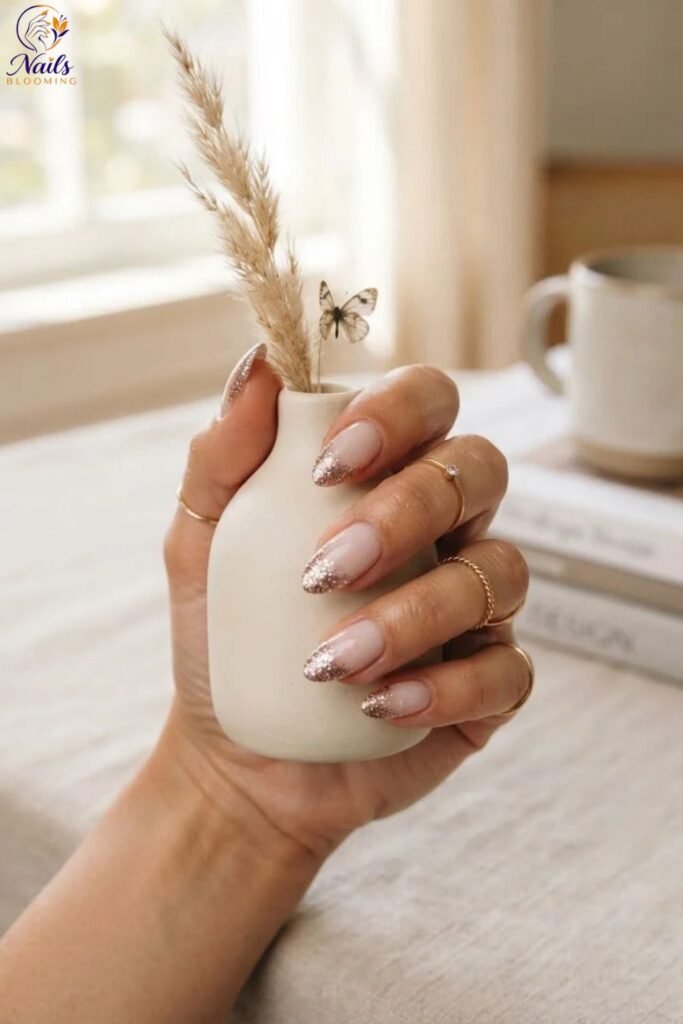
Dipping just the tip section into fine glitter, rather than applying a solid painted line, creates one of the more visually textured variations of French tip nails, offering sparkle and dimension through technique alone rather than elaborate hand-painted detail work. This particular finish creates genuine shimmer that catches light beautifully right at the nail’s focal point.
This technique tends to work especially well for special occasions specifically, like holiday parties or weddings, since the glitter concentration at just the tip keeps the overall look manageable for everyday wear while still delivering visual impact when needed within French tip nails.
A helpful example: someone wanting a festive, photo-ready manicure without committing to full glitter coverage often finds glitter-dipped tips offer genuine visual impact through targeted placement alone. This makes it one of the more accessible, high-impact variations of French tip nails for those wanting sparkle without overwhelming the overall design.
Sealing the glitter tip with a thick top coat helps smooth any texture from the glitter particles, preventing snagging that could otherwise occur during daily activities.
Negative Space French Tips
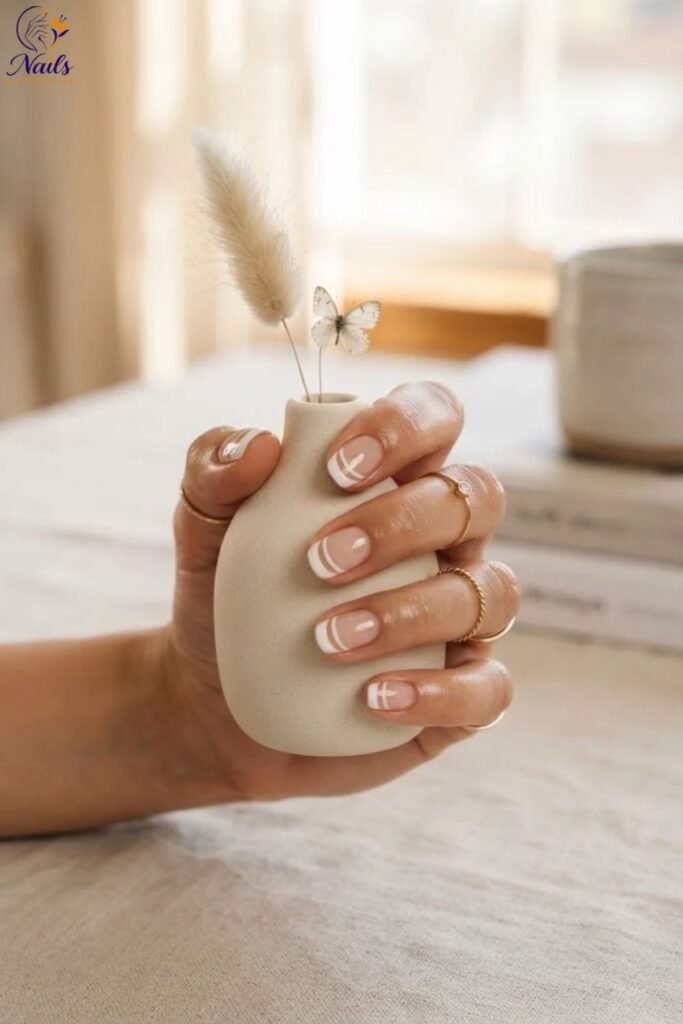
Leaving a thin strip of bare nail between the base color and the tip line creates a striking yet understated addition to French tip nails, using contrast between polish and exposed nail to create visual interest beyond the standard two-tone structure. This technique inherently requires precise application, since any smudging along the negative space becomes highly visible.
This particular design category also tends to grow out more gracefully than fully covered designs, since the exposed natural nail strip blends more seamlessly with new growth compared to a fully polished nail, where the demarcation between old polish and fresh growth becomes obviously visible over time.
A helpful example: someone maintaining French tip nails who wants a design that stays looking fresh longer between manicure appointments might find negative space tips particularly practical, since the growing-out process is less visually jarring than it would be with a fully covered design. This makes it a genuinely useful choice among French tip nails for those wanting to stretch time between salon visits.
This design also works particularly well paired with a bold or colored tip, since the negative space strip creates a striking focal point against the more saturated tip color specifically.
Matte Finish French Tips

Applying a matte top coat over the traditional glossy French tip structure creates a genuinely modern variation among French tip nails, offering a muted, velvety finish that reads as distinctly more contemporary than the same design in standard glossy finish. This particular combination has grown in popularity as matte finishes have moved from a niche trend into a mainstream nail styling staple.
The matte finish specifically plays a significant role in why this variation feels fresh rather than simply replicating a decades-old classic design. A glossy tip can sometimes feel overly traditional, while the same tip structure in matte finish creates a more editorial, updated quality instead, even while keeping the recognizable two-tone French structure intact.
A helpful example: someone who loves the classic French manicure look but wants it to feel more current might find that switching from glossy to matte finish specifically resolves this, since matte inherently modernizes the overall appearance without changing the underlying design. This finish distinction is a detail many general nail guides overlook when discussing French tip nails specifically.
Applying a matte topcoat specifically formulated for this finish, rather than simply skipping the topcoat entirely, still provides necessary protection and durability while maintaining the signature muted, contemporary appearance.
French Tip Nails with Chrome Accent
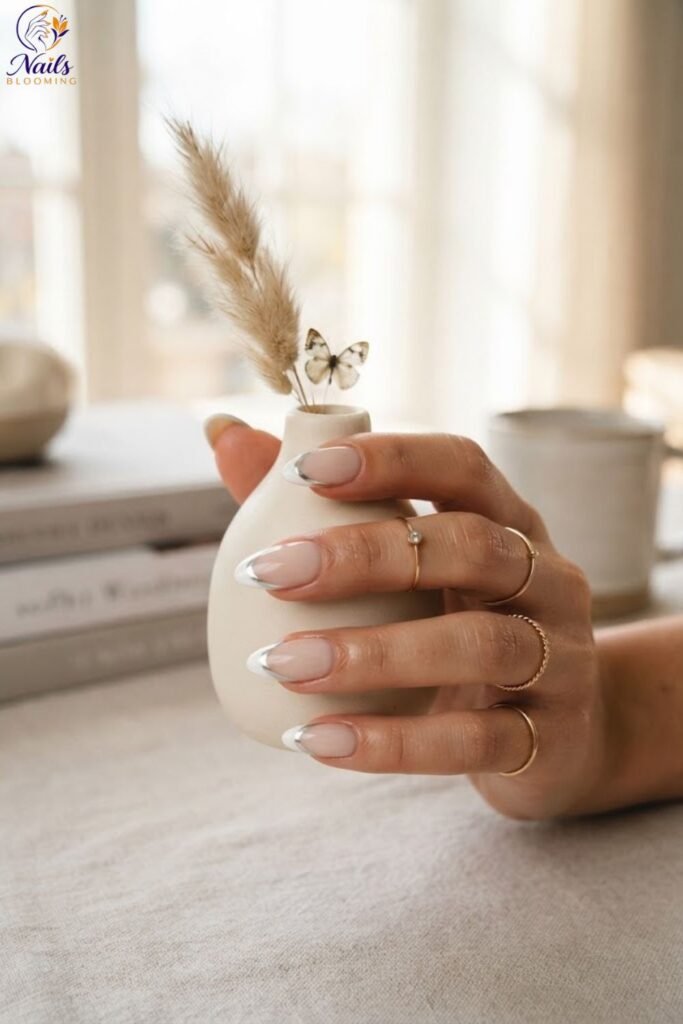
Adding chrome powder as an accent specifically to the tip section, rather than the entire nail, creates a genuinely elevated variation among French tip nails, combining the classic two-tone structure with a light-catching, metallic finish. This particular technique requires the chrome to be applied only to the tip, leaving the base section in standard glossy or matte finish.
This particular approach tends to work especially well for those wanting a design that feels both trendy and timeless simultaneously, since the French tip structure remains instantly recognizable while the chrome tip adds a contemporary, eye-catching update to the classic look within French tip nails.
A helpful example: someone wanting to try chrome nails without committing to an entirely non-traditional look often finds that pairing chrome specifically at the tip offers a genuine middle ground, providing modern shimmer while retaining a familiar, classic structure. This is a popular, practical choice among French tip nails for those easing into newer nail trends.
Sealing the boundary between the base and the chrome tip carefully with a thin top coat line helps prevent the two sections from blending together or looking smudged.
Choosing French Tip Nails by Nail Shape
Nail shape plays a meaningful role in how French tip nails ultimately look, a detail generic style roundups often skip entirely. Those with almond or oval-shaped nails tend to have the most flexibility, since the naturally tapered surface complements curved tip lines without requiring significant adjustment to the classic technique.
Those with square or shorter nails specifically tend to benefit from thinner tip lines and straighter application, since a thick, traditional tip width paired with a flatter, more compact nail surface can sometimes create a disproportionate, heavy appearance. Choosing a scaled-down tip width helps French tip nails look balanced on these shapes.
A helpful example: someone with short, square nails who applies a thick, traditional tip width meant for longer nails might find the tip line looks disproportionately heavy against the shorter nail surface. Choosing a thinner, more subtle tip line instead still achieves the classic French structure while maintaining better proportion among French tip nails specifically suited to square or shorter shapes.
Discussing your specific nail shape directly with your nail technician, rather than choosing a tip width purely based on trend photos, helps ensure the final result genuinely flatters your individual nails.
Common Mistakes to Avoid With French Tip Nails
One of the most frequent mistakes is applying a tip width that doesn’t match nail length, resulting in a tip that looks disproportionately thick or thin relative to the overall nail size. Adjusting tip width specifically for your nail length helps avoid this common issue within French tip nails.
Another common error involves choosing a stark white tip against very fair or very deep skin tones without considering contrast, which can sometimes create a slightly jarring rather than polished overall appearance. Discussing tip color options suited to your specific skin tone with your nail technician produces more consistently flattering results.
Neglecting proper curing and sealing between the base and tip sections is another frequently repeated mistake, since an improperly sealed boundary can lead to the tip chipping or lifting before the rest of the manicure. Ensuring each layer is properly cured before adding the next helps maintain the clean separation French tip nails depend on.
Finally, skipping regular touch-ups undermines the crisp, polished look French tip nails are known for, since the tip area shows wear and regrowth more visibly than a solid color manicure. Scheduling maintenance every two to three weeks helps keep the design looking consistently fresh.
The Future of French Tip Nails
French tip nails continue to evolve alongside broader industry advances in precision application tools, with more nail technicians using fine detail brushes and striping tape specifically designed for thinner, more scaled-down tip lines suited to varying nail lengths and shapes.
There’s also a growing emphasis on personalized consultation, with more technicians specifically discussing appropriate tip width, color, and shape based on each client’s individual nail proportions and skin tone, reflecting broader recognition that this classic design genuinely benefits from customized planning.
Product technology is advancing alongside this trend as well, with more brands developing specialized striping tapes, chrome powders, and long-wear gel formulas specifically suited to the precision work modern French tip nails variations often require.
Looking ahead, at-home gel systems with built-in French tip guides are becoming more widely available, potentially making salon-quality French tip nails more achievable for those maintaining their manicures between professional appointments.
Conclusion
French tip nails prove that this timeless design offers genuine versatility for both classic elegance and modern reinvention. From the traditional white tip to a chrome-accented variation, there’s an option here suited to nearly every style preference and nail shape. The key is choosing a tip width and color that genuinely work with your nail proportions. Ready to try one of these French tip nails ideas Bring this guide to your next appointment and start the conversation with your nail technician.

Alex Parker is a nail and beauty enthusiast with 5 years of experience in nail art and beauty trends. Through NailsBlooming.com, Alex shares fresh nail designs, trendy colors, seasonal styles, and simple manicure inspiration. The goal is to make finding beautiful and creative nail ideas easy for everyone.


