
Short Nail Designs: The Complete Guide to Practical, Long Wearing Manicures
Short nail designs have a quiet advantage that longer styles rarely match: they actually survive real life. Typing, cooking, lifting, driving, and everyday chores all put constant stress on nails, and shorter length simply holds up better under that pressure. However, choosing short nail designs that also last, stay comfortable, and still look polished takes more thought than picking a favorite color and hoping for the best.
This guide goes beyond a simple gallery of short nail designs. It explains how prep, finish, and design placement all affect how long a manicure actually stays looking fresh, along with details most articles skip entirely like why certain popular finishes chip faster on short nails, and why the same design can feel completely different depending on how much of the nail bed shows. Whether you work with your hands all day or simply prefer a low fuss look, this is the deeper, more practical guide.
Why Short Nail Designs Suit Active Lifestyles
Short nail designs make particular sense for anyone whose hands stay busy throughout the day, since shorter length reduces snagging, breakage, and the constant awareness of protecting longer nails during ordinary tasks. Nurses, teachers, parents, musicians, and anyone who types heavily often find that shorter nails simply fit their routines better than longer alternatives ever could.
This practical advantage matters because it changes what “good design” actually means. A design that looks stunning but chips within two days offers far less value than a slightly simpler one that stays intact for two weeks. Short nail designs that prioritize durability, through proper prep, flexible formulas, and thoughtful placement, tend to deliver considerably more satisfaction over time.
A helpful example: someone who types for most of the workday often finds that long nails clatter against the keyboard and catch on edges, while short nails move comfortably and stay intact. Choosing designs built for this kind of daily wear, rather than purely photogenic ones, changes the entire experience of having a manicure at all.
Because short nails also show wear differently, with less length to hide chips or uneven growth, short nail designs benefit from cleaner, more deliberate application than longer sets where minor flaws can blend into a busier overall design.
Don’t Miss: https://nailsblooming.com/elegant-nail-designs/
Solid Color Over a Strengthening Base

The simplest of all short nail designs, a single solid color, becomes considerably more durable when applied over a proper strengthening base coat. This foundation layer bonds to the natural nail and gives color something stable to grip, which dramatically reduces peeling and premature chipping.
Choosing a base coat formulated for your specific nail type matters more than most people expect. Thin, flexible nails often benefit from a bendable base that moves with the nail, while harder, more brittle nails may need a more nourishing formula. Matching the base to your nail’s natural behavior helps the color layer stay intact rather than cracking under normal flexing.
A helpful example: someone who applies color directly onto bare nails often notices chipping at the tips within a few days, while the same color over a proper base coat frequently lasts twice as long. This small extra step is among the most valuable, least glamorous secrets behind long lasting short nail designs.
Sealing the free edge, brushing topcoat slightly over the tip of each nail, creates a protective cap that further reduces chipping, particularly important on short nails where the tip takes the most daily contact.
Gel Manicure Designs for Extended Wear

Gel manicures offer one of the most reliable routes to long wearing short nail designs, since the cured formula resists chipping, scratching, and dulling far better than traditional polish. For anyone tired of redoing their manicure every few days, gel often changes the equation completely.
This durability comes with a few considerations worth understanding. Gel requires proper curing under a lamp, and removal needs care to avoid stripping the natural nail. Skipping the recommended soak off process and peeling gel off instead is one of the most common causes of thin, damaged nails, which undermines the very nail health short nail designs depend on.
A helpful example: someone who loves the longevity of gel but notices their nails feeling thin afterward might find that taking occasional breaks between gel manicures, and using a nourishing cuticle oil daily, helps maintain healthier nails overall. Balancing durability with nail health keeps short nail designs sustainable long term rather than damaging.
Choosing a professional application for gel, at least initially, helps ensure proper prep and curing, both of which significantly affect how well the manicure holds up.
Minimalist Tip Art
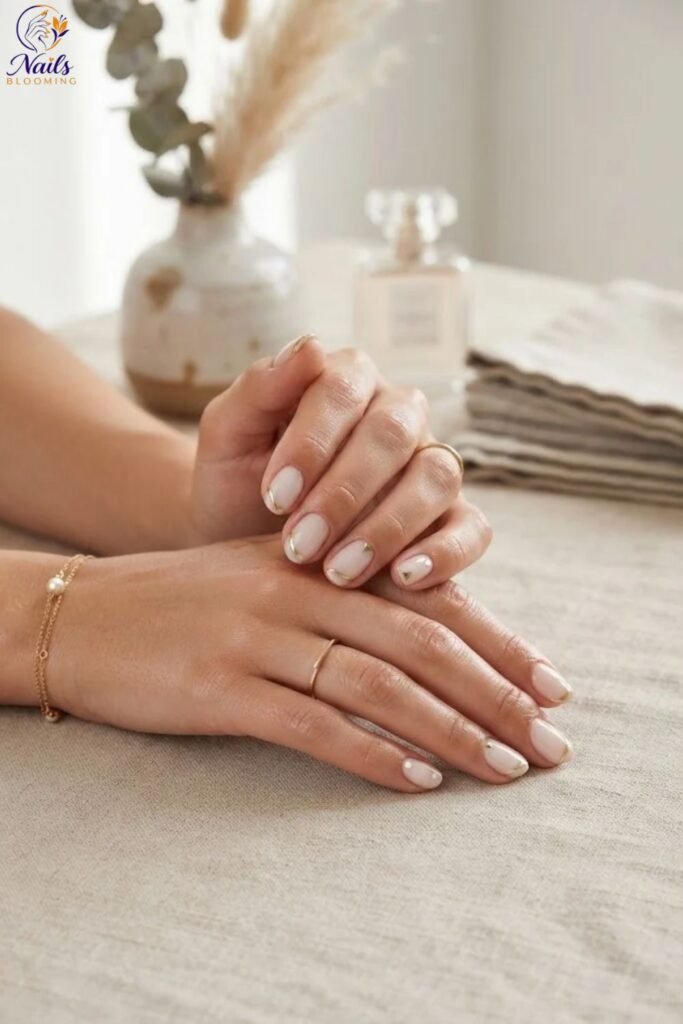
Minimalist tip art places a small design element, a thin line, a tiny dot, or a subtle color accent, only at the tip of each nail. This approach suits short nail designs especially well because it decorates the most visible part of the nail without crowding the smaller surface area.
The tip also happens to be where a design naturally draws the eye, making even a very small accent feel intentional. On shorter nails, this restraint often looks more polished than a fully detailed design, which can appear cramped when squeezed onto limited space.
A helpful example: someone who finds full nail art overwhelming on short nails might discover that a single thin metallic line across each tip creates a refined, finished look with minimal effort. This kind of understated accent has become one of the most popular short nail designs precisely because it balances interest with simplicity.
Because the design sits at the tip, it also grows out more gracefully than designs concentrated near the cuticle, which show regrowth gaps much sooner.
Seasonal Color Rotation

Rotating colors with the seasons offers an easy way to keep short nail designs feeling fresh without changing your overall approach. Soft pastels for spring, bright or sheer tones for summer, warm neutrals and deep shades for fall, and rich jewel tones for winter create a natural rhythm that keeps a simple manicure routine interesting.
This method works especially well for short nails because solid or lightly accented color is already the most practical style, and seasonal shifts add variety without requiring intricate nail art skill. The same technique and application, simply in a different shade, feels entirely new.
A helpful example: someone who typically wears the same nude polish year round might find that switching to a warm terracotta in autumn and a deep berry in winter makes their manicure feel current and intentional, even though the design itself stays equally simple. This seasonal approach is one of the easiest ways to keep short nail designs from feeling repetitive.
Keeping a small collection of four or five seasonally appropriate shades, rather than dozens of colors, makes this approach both affordable and easy to manage.
Reverse French Manicure

The reverse French flips the traditional design by placing the accent color at the base of the nail, along the cuticle line, rather than at the tip. This creates a distinctive crescent shape that feels modern while remaining clean and understated, making it one of the more interesting short nail designs available.
This placement has a genuine practical benefit on shorter nails: because the accent sits near the cuticle rather than the tip, it isn’t subject to the tip wear that eventually chips traditional French designs. The result often looks fresh for longer with less maintenance.
A helpful example: someone who loves the classic French look but finds the white tips chip or yellow quickly might find the reverse version holds up better while offering a more contemporary appearance. A thin, precise crescent in a soft neutral or metallic tone tends to look especially refined.
Achieving a clean crescent requires a steady hand or a small nail art guide, since the curve needs to follow the natural line of the cuticle for the design to look intentional.
Sheer Tint With a Glossy Finish

A sheer, tinted polish finished with a high shine topcoat creates a soft, healthy looking effect that works beautifully among short nail designs. Rather than opaque color, the sheer tint lets the natural nail show through slightly, resulting in a polished but effortless appearance often described as “your nails, but better.”
This style also forgives imperfections and regrowth far more easily than opaque color, since the translucent finish doesn’t create a hard demarcation line as the nail grows. For anyone wanting minimal upkeep, this makes it especially practical.
A helpful example: someone with a demanding schedule who can’t manicure every week often finds a sheer pink or peachy tint remains presentable for far longer than a bold, opaque shade, since chips and growth are far less noticeable. This makes sheer finishes a smart choice for low maintenance short nail designs.
Applying two thin coats, rather than one thick layer, builds an even tint without streaking, and a glossy topcoat adds the final polished touch.
Single Dot Accent
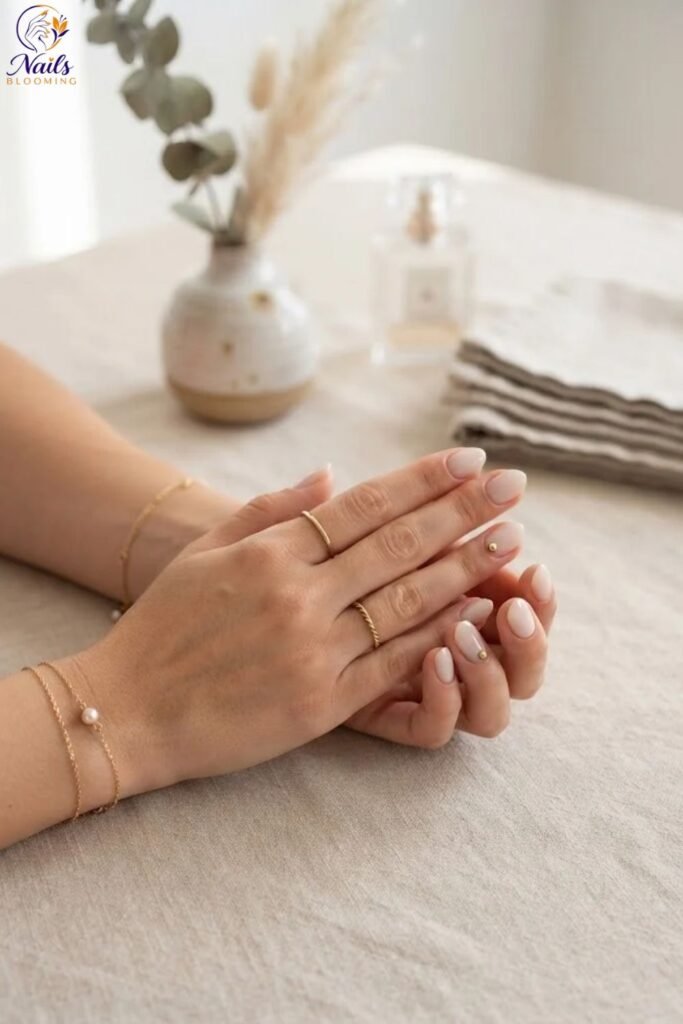
A small dot, placed near the cuticle, at the center, or along the edge of each nail, brings a playful yet controlled touch to short nail designs. Because a dot is such a small, simple element, it fits comfortably even on the shortest nails without feeling crowded.
Dotting tools, inexpensive and widely available, make this design remarkably easy to execute cleanly. Working with a contrasting color, a metallic, or a white against a colored base creates a subtle graphic effect that feels modern without demanding artistic skill.
A helpful example: someone who wants a little personality without committing to full nail art might place a single tiny dot in the same position on every nail, creating a coordinated, deliberate look. This simplicity is part of why dot accents remain popular among short nail designs for beginners.
Keeping dot placement consistent from nail to nail helps the design read as intentional rather than random, which matters more on a small canvas where inconsistency shows quickly.
Metallic Foil Accents

Applying a thin strip or small patch of metallic foil to a short nail adds glamour through shine rather than detail. Gold, silver, or rose gold foil catches light beautifully and creates a luxe effect that suits short nail designs particularly well since it doesn’t require covering much surface area.
This technique works by pressing foil onto a slightly tacky base layer, then sealing it beneath a topcoat. A small, strategic placement, like a thin vertical strip or a tiny corner accent, delivers the metallic impact without overwhelming a compact nail.
A helpful example: someone wanting a hint of luxury for a special occasion might add a single gold foil accent to one or two nails, letting the rest remain a soft, neutral shade. This restraint keeps the look sophisticated and prevents the metallic element from feeling excessive on shorter nails.
Sealing foil carefully with a strong topcoat helps prevent lifting or peeling, since exposed foil edges are more prone to catching and wearing down during daily activity.
Half Moon Two Tone Design

The half moon design colors the crescent at the base of the nail differently from the rest, creating a subtle two tone effect that feels deliberate and slightly retro. Among short nail designs, this look stands out because it works with the natural curve of the nail rather than adding an extra element on top.
Pairing complementary tones, a soft nude with a deeper neutral, or a pale shade with a metallic, keeps the design refined. Because it follows the nail’s natural shape, the half moon tends to look cohesive even on very short nails where more elaborate art might not fit.
A helpful example: someone drawn to vintage inspired style might choose a cream base with a thin gold half moon near the cuticle, creating a classic, polished result. This kind of design offers visual interest while remaining simple enough to maintain.
Using small reinforcement stickers or a fine brush to outline the half moon ensures clean edges, which is essential for the design to look crisp rather than smudged.
Textured Sugar or Sand Finish
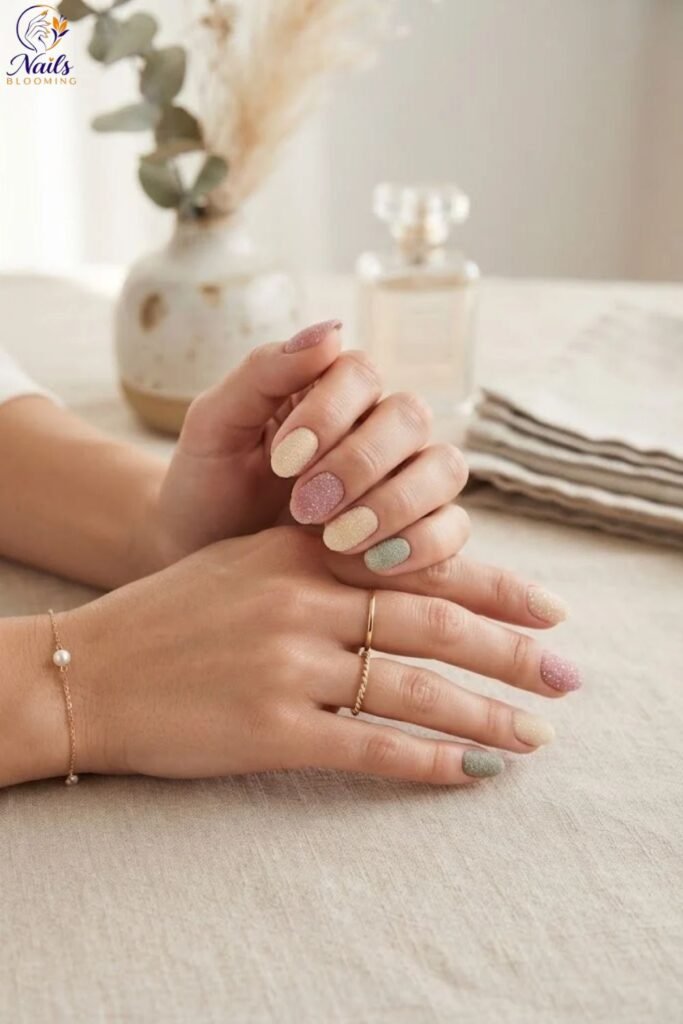
A textured, sugar like finish adds tactile dimension to short nail designs without requiring any painted detail. The slightly grainy surface catches light softly and offers a distinctive, cozy look that has become especially popular in cooler months.
This finish is achieved with a specialty texture polish or by sprinkling fine particles over a tacky base before sealing. Because the effect comes from the finish itself, it works beautifully on short nails where intricate design work might feel cramped.
A helpful example: someone wanting something different from a standard glossy manicure might find a sugar textured deep shade creates a rich, velvety look that feels fresh and seasonal. The texture itself provides the visual interest, making additional design unnecessary among short nail designs.
Because textured finishes can catch on fabric more than smooth ones, applying them to just a few accent nails, rather than all ten, keeps the manicure comfortable for everyday wear while still adding interest.
Preparing Nails for the Best Short Nail Designs
Proper preparation makes a bigger difference to short nail designs than any individual design choice. Shaping edges smoothly, gently pushing back cuticles, and buffing away oils before applying color all help polish adhere evenly and last longer.
Shorter nails also make prep particularly visible, since there’s less length to distract from uneven edges or rough cuticles. A few extra minutes on preparation tends to noticeably improve how polished the finished manicure looks, regardless of the specific design chosen.
A helpful example: someone who skips wiping nails with rubbing alcohol before polish often finds that leftover natural oils cause peeling within days. This single step, cleansing the nail plate, is one of the simplest ways to improve how long short nail designs last.
Daily cuticle oil, applied consistently, keeps the surrounding skin healthy and helps prevent the hangnails and dryness that can undermine the neat, tidy look short nails depend on.
Common Mistakes to Avoid With Short Nail Designs
One of the most frequent mistakes is skipping the base and topcoat, which are the foundation of durability. Even the most beautiful color will chip quickly without proper layering underneath and a sealing layer on top.
Another common error involves choosing overly intricate designs meant for longer nails and squeezing them onto a smaller canvas, which often results in a cramped, cluttered look. Scaling designs down, or choosing simpler ones, produces cleaner results among short nail designs.
Neglecting nail and cuticle health is another frequently repeated mistake, since short nails show dryness, peeling, and uneven cuticles more visibly. Regular moisturizing and gentle care keep the overall look polished.
Finally, picking a shade that doesn’t suit your skin undertone can make short nail designs look less flattering than intended. Testing colors against your skin in natural light helps identify shades that genuinely complement you.
The Future of Short Nail Designs
Short nail designs continue to grow in popularity alongside a broader cultural shift toward practical, health conscious beauty. As more people prioritize nail health and everyday comfort over dramatic length, brands and technicians are developing products and techniques specifically suited to shorter nails.
There’s also growing interest in flexible, breathable formulas designed to wear comfortably for weeks without damaging the natural nail, addressing one of the main concerns people have about long wearing manicures.
Sustainability is influencing this space as well, with more brands developing gentler removers and reusable tools that reduce waste while protecting nail health.
Looking ahead, digital tools, including AI based color matching and design preview apps, are beginning to help people visualize how different short nail designs will look on their own hands before committing, reducing the trial and error involved in finding what works.
Conclusion
Short nail designs prove that practicality and polish can go hand in hand. From a solid color over a strong base to a sheer tint or a half moon accent, there’s an option here for every lifestyle and skill level. The key is choosing designs and prep that hold up to daily life. Ready to try one Start with proper preparation and a design that fits your routine.

Alex Parker is a nail and beauty enthusiast with 5 years of experience in nail art and beauty trends. Through NailsBlooming.com, Alex shares fresh nail designs, trendy colors, seasonal styles, and simple manicure inspiration. The goal is to make finding beautiful and creative nail ideas easy for everyone.


